
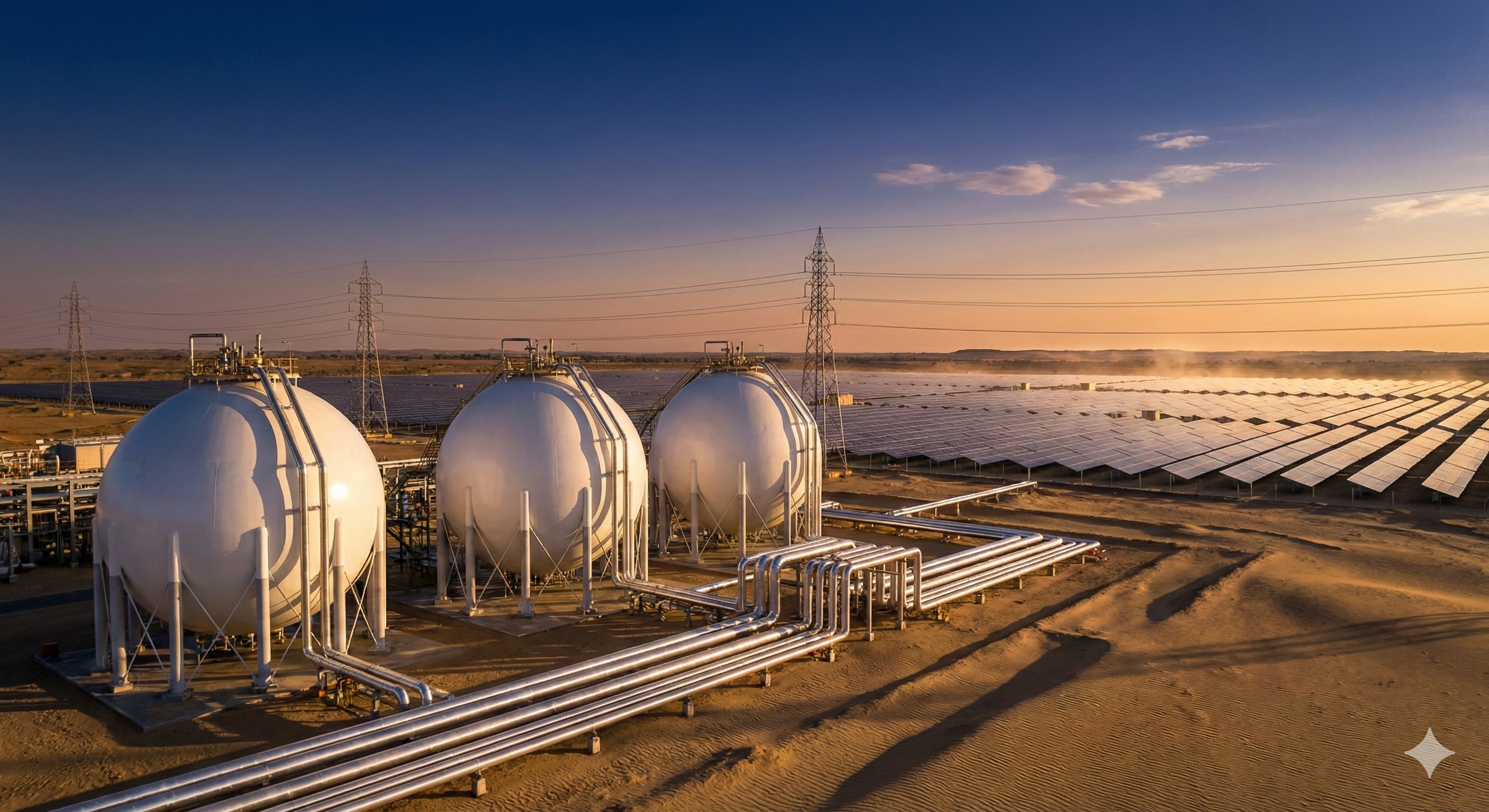
Bharat has officially terminated its tenure as a passive consumer of global gas. The nation has internalised the nutrient cycle and asserted its status as a sovereign owner of its agrarian destiny. A definitive industrial reality has replaced the romanticised vision of the energy transition. The Agrarian Sovereign is maturing, using solar and wind energy to create the molecules that feed the nation. Decoupling the industrial plate from the volatile fluctuations of West Asian and European gas markets is a live, high-velocity transformation.
Nutrient Emancipation
Dr Mansukh Mandaviya, Union Minister for Chemicals and Fertilisers, is orchestrating an agricultural pivot that matches the scale of the original Green Revolution. His blueprint for “zero urea import by 2025” is a declaration of fiscal independence. The strategy involves replacing nearly 90 lakh tonnes of imported urea with domestic green alternatives and high-precision nanofertilisers. Mandaviya views the fertiliser plant of the future as a molecular refinery, decoupled from the unpredictability of natural gas. Success in this landscape allows the state to reallocate billions in subsidy savings toward rural infrastructure and high-velocity agricultural research.
Market Maker Catalyst
The Solar Energy Corporation of India (SECI) has stepped into the role of the ultimate market maker. Through the Strategic Interventions for Green Hydrogen Transition Scheme (SIGHT), SECI has successfully discovered prices for 7.24 lakh tonnes of green ammonia at a historic low of ₹55.75 per kg. This initiative is a masterful move in demand consolidation. By providing a 10-year purchasing guarantee, SECI derisks the transition for legacy fertiliser giants. The state’s strategic apparatus absorbs the initial cost of green molecules, not the individual farmer. It creates a predictable pathway for capital to flow into giga-scale green ammonia plants, turning the agrarian landscape into a primary engine for the National Green Hydrogen Mission.
Molecular Independence
The transition from grey ammonia—derived from natural gas—to green ammonia produced from water and renewable power is the cornerstone of “molecular independence”. Existing fertiliser assets are being reengineered to accept green feedstocks, ensuring instant scalability for the domestic hydrogen economy. This initiative is a rapid retrofitting of the national industrial base. Bharat is effectively “electrifying the molecule”. By using domestic wind and solar to split water into hydrogen and combining it with nitrogen from the air, the nation creates a closed-loop system for nutrient production. Such a process eliminates the carbon shadow of Indian agriculture, making our exports the cleanest in the global market.
Nutrient Engineering
Technology is the primary instrument of this agrarian recalibration. The deployment of “nano urea”—a liquid nutrient with high surface area—allows for a significant reduction in conventional urea usage while maintaining crop yields. This is the ultimate efficiency play. Traditional granular urea suffers from nearly 70% nitrogen wastage through leaching and evaporation. Nano urea ensures that the nutrient is delivered directly to the plant’s leaf, resulting in near-total absorption. Such a precision approach does more than save money; it restores the biological health of the soil. We are moving from “bulk application” to “nutrient engineering”, a shift that mirrors the transition from broad-spectrum medicine to personalised genomics.
Fiscal Correction
Correcting the fiscal imbalance is the silent triumph of the Agrarian Sovereign. Every tonne of green urea produced domestically is a direct saving in foreign exchange. By decoupling fertiliser prices from the global gas index, Bharat shields food inflation from external shocks. The Reserve Bank of India views these developments as a critical pillar of macroeconomic stability. The nation has achieved true sovereignty when a pipeline crisis in Eastern Europe no longer determines the price of a basic meal. This fiscal headroom provides the government with the dry powder required to fund the next generation of industrial corridors and Vande Giga Hubs.
Sovereign Legacy
The roadmap for 2035 involves the complete decarbonisation of the agricultural value chain. We are moving toward a future where the farm itself becomes a micro-energy hub. Solarising agricultural pumps and integrating biomass-to-green-hydrogen plants at the village level will complete the circle of independence. The Agrarian Sovereign is not just about fertilisers. It is about reclaiming the dignity of Indian soil. India has moved beyond the era of survival. We are now in the era of dominance. The molecules are domestic. The nutrients are sovereign. The future is homegrown.
Solutions Spotlight
The Agrarian Mandate: Five Sovereign Actions
- • SECI to scale SIGHT-backed green ammonia procurement beyond 7.24 lakh tonnes, creating a 10-year demand anchor for giga-scale green ammonia plants
- • Retrofit legacy fertiliser plants in UP, Andhra Pradesh, and Gujarat with dedicated renewable-powered electrolyser capacity
- • Accelerate nano urea rollout via IFFCO to target 30% replacement of conventional urea, saving ₹35,000–45,000 crore in annual subsidy
- • Mandate ‘Molecular Refinery’ standards for all new fertiliser plants—green ammonia feedstock by design, not retrofit
- • Launch a Carbon Dividend Programme converting farmer nitrogen reduction into tradeable carbon credits, creating agrarian revenue streams
Key Takeaways
- • Bharat has terminated its tenure as a passive consumer of imported natural gas—the nutrient cycle is now being internalised
- • SECI’s SIGHT scheme discovered green ammonia at ₹55.75/kg—the price discovery event that unlocks the entire sector
- • Zero urea import by 2025 is a declaration of fiscal independence, not an environmental target
- • Nano urea’s near-total nitrogen absorption versus 70% wastage in conventional urea is the efficiency revolution that saves the subsidy
- • When a European pipeline crisis no longer sets the price of an Indian meal, sovereign legacy is achieved
Strategy Note
The Agrarian Mandate is Bharat’s most powerful convergence play: green energy sovereignty, food security, fiscal consolidation, and farmer income enhancement—achieved through a single molecular transition. The policy window is 2025–2028, when green hydrogen costs are declining and SIGHT has proven the price discovery mechanism. Execute now or entrench the import dependency.