
India's Macroeconomic Blueprint for Supply Chain Ascendancy
Dr Ashima Goyal, distinguished economist and former RBI MPC member, shares her macroeconomic blueprint for propelling India's supply chain further
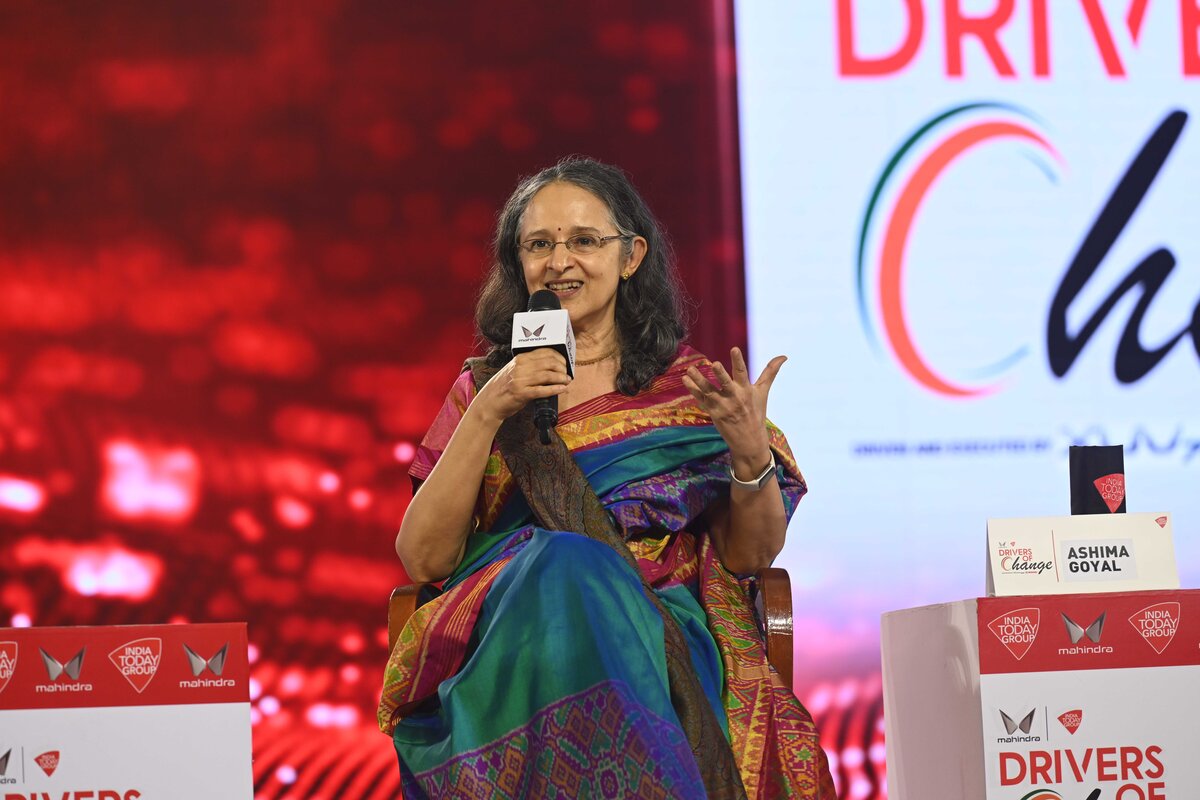
Dr Ashima Goyal
What does it take for a country to become a global economic powerhouse? This question becomes more relevant in the light of India's economic rise in the last decade or so. The country has strong economic fundamentals, and a sharply defined vision. It is built with enough mettle to mitigate the threat of external factors, like rapid deglobalisation and volatility, with resilience and growth-oriented solutions embedded deep into its policy.
Global external events give us absolutely no chance to apply any immediate measures to stop them from occurring or lessening its impact. What happens when a critical shipping route, like the Suez Canal, gets blocked? A major country suddenly slaps a new tariff on Indian goods. It makes our products more expensive and harder to sell, which hurts our manufacturers. During economic downturns, it's natural for global investors to get nervous; they pull their money out of our country, making our stock market wobble and our currency weak.
The answer to these complex issues is simple. We must build a solid defense mechanism. And the cost of not doing so is immense: we risk derailing our growth, losing credibility as a reliable global partner and squandering an immense opportunity to become a global manufacturing hub.
Such a defence mechanism will be the byproduct of a strong macroeconomic architecture that not only withstands external and uncontrollable pressures, but also turns them into opportunities. We are pleased to bring the clear and compelling solutions framework of Dr Ashima Goyal, a distinguished voice in Indian economic policy and a former member of the RBI's Monetary Policy Committee. "The key is to create a sophisticated, coordinated, and resilient macroeconomic architecture that can manage these shocks and capitalise on new opportunities," she explains.
The complete blueprint for resilience she has proposed encapsulates a coordinated strategy designed to proactively manage many interconnected challenges. But how exactly does this blueprint work? What are the specific pillars that will fortify India's economy for decades ahead?
A Stable Economic Foundation
What's the single most important thing a country can do to encourage long-term investment? According to Dr Goyal, it's all about having a predictable and stable monetary policy. "Flexible inflation targeting," she says, "isn't just about controlling prices. It's about providing the stability needed for long-term capital investments." This strategy keeps the real interest rate—the return on your savings after accounting for inflation—low, encouraging businesses and individuals to invest with confidence.
This stability has a profound impact. With low and stable inflation, a factory owner can confidently plan to invest in new machinery without worrying that their costs will skyrocket or that customer demand will disappear. This predictable environment also protects our wallets, as the prices of everyday goods don't fluctuate wildly, preserving our purchasing power and allowing us to save more effectively.
In essence, when businesses are confident and consumers have money to spend, the entire economy benefits, attracting the capital needed to build the supply chain infrastructure that will define India's future.
Harmonising Policy Levers
A stable economy needs more than just a single driver. It requires the government's fiscal policy (spending and taxes) and the Reserve Bank of India's monetary policy (interest rates and money supply) to be perfectly in sync. Dr Goyal's second pillar is a call for just this: a shift from a historical dynamic of "dominance" to one of "genuine coordination".
Without this coordination, the system often works against itself. Imagine a scenario where a government runs large deficits to fuel growth, but the spending isn't productive. The inevitable inflation that follows forces the RBI to raise interest rates, which then stifles business investment and slows down growth. Dr Goyal argues that a democracy needs to use its strengths while moderating its weaknesses. "The proposed coordination would, therefore, use the strengths but moderate the weaknesses of both the government and the central bank," she explains.
So, what does a coordinated solution look like? It means the government acts as a "supply-side" partner to the central bank. Instead of just injecting money into the economy, the government focuses on smart, targeted spending that reduces costs and boosts productivity. These actions help to address the root causes of inflation and supply shocks, making it far easier for the central bank to keep interest rates low and stable. This unified approach provides the clear, stable policy environment necessary to propel India's ascent.
Attracting Stable Capital
In an increasingly globalised world, a country's economic health is tied not just to its domestic policies but also to how it engages with international capital. The third pillar of Dr Goyal's blueprint addresses the crucial challenge of managing capital flows—and it is rooted in the principle that all capital is not created equal.
Historically, many emerging economies have opened their doors too quickly to foreign capital, only to be hit by sudden and disruptive outflows during times of global stress. Dr Goyal argues that India has taken a smarter, more deliberate path. Instead of a "rapid big bang" approach, India has followed a careful and well-sequenced liberalisation of its capital account. As she puts it, "It is better to prioritise the attraction of stable, long-term capital that contributes to productive investment, rather than volatile flows that can destabilise the economy."
This strategy has been a resounding success. The focus has been on welcoming Foreign Direct Investment (FDI), where companies build factories, set up research centres, and create jobs. This type of capital is "sticky"; it is tied to physical assets and real-world operations, making it highly resilient to short-term market shocks. By prioritising FDI, India has not only secured a stable source of funding but has also gained access to new technologies, management practices, and global markets.
From Grassroot to Global
To truly build an economy that is resilient to external shocks, the blueprint must not just be about macro-level policies; it must also empower the grassroots. Dr Goyal's final pillar is a clear focus on strengthening India's micro, small, and medium enterprises (MSMEs) by leveraging its robust digital public infrastructure (DPI).
MSMEs are the true engines of growth, and in a de-globalised world, they are our most powerful defense against supply chain shocks. When a global supplier falters, a strong, digitally-enabled domestic MSME sector can step in to fill the gap. Dr Goyal has consistently championed this bottom-up approach. As she has written, "Resilience is built not just through top-down macroeconomic management, but also by enabling a bottom-up revolution through digital inclusion and formalisation."
This is where India's DPI has been a game-changer. Platforms like the Unified Payments Interface (UPI) have brought millions of small businesses into the formal economy. It has given them a verifiable digital footprint, which in turn makes them eligible for formal credit and better access to markets. This digital empowerment helps them scale, compete with larger players, and integrate into domestic supply chains, making the entire ecosystem more robust and dynamic. This final pillar ensures that India's economic strength is built on a broad and stable foundation.
The Blueprint for Ascendancy
In an era of global uncertainty, India stands poised to become a global economic powerhouse. Dr Ashima Goyal's macroeconomic blueprint for resilience is not a mere theory but a powerful, coordinated strategy to achieve this.
It rests on four key pillars:
- •A Stable Economic Foundation: A predictable monetary policy with low, stable inflation to attract long-term investment.
- •Harmonising Policy Levers: A coordinated approach between government and the central bank to ensure growth-friendly policies.
- •Attracting Stable Capital: A deliberate strategy to welcome "sticky" foreign direct investment (FDI) over volatile capital.
- •Empowering a Digital Ecosystem: Leveraging digital public infrastructure to strengthen MSMEs, the grassroots of India's domestic supply chain.
By executing this comprehensive and proactive blueprint, India can successfully navigate a de-globalised world and turn its current momentum into a decisive and permanent position of supply chain ascendancy.