
Beyond the Grid to Own the Molecule
Generating the fuel is the baseline. Owning the intellectual property dictates global power. Deepak Yadav reveals the $61 billion CEEW blueprint to dominate the hydrogen supply chain. Trading legacy oil dependency for modern hardware dependency is industrial surrender.
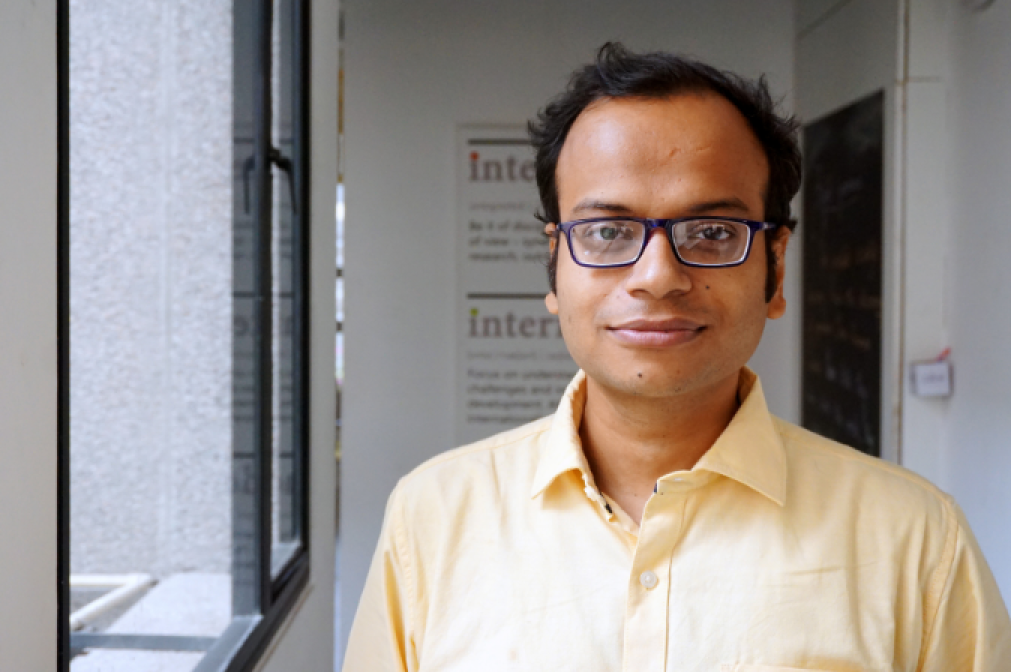
Deepak Yadav
Senior Program Lead, Council on Energy, Environment and Water (CEEW)
"India faces a binary choice: settle for being the world's most efficient gas station for the Global North — or engineer a massive strategic pivot to become the 'high-tech furnace' of the Global South."
— Deepak Yadav, CEEW
CEEW estimates total potential support of approximately INR 5.05 lakh crore (USD 61 billion) across state and central policies for green hydrogen.
Green ammonia at USD 637/tonne — already below grey ammonia's five-year weighted average of USD 676/tonne.
3 GW of electrolyser manufacturing capacity allocated under PLI — INR 4,440 crore.
Three maritime export hubs identified: Kandla, Paradip, Tuticorin — 4,500 acres allocated.
Climate goals are the public narrative. Owning the global means of production is the boardroom reality. The world spent the last decade aggressively chasing the electron, and India built a massive grid to harness it. Now, the focus shifts entirely to the molecule. Global capital remains fixated on solar parks and wind farms, yet the true frontline of industrial sovereignty has moved into the high-precision chemistry of the electrolyser stack.
The stakes are absolute. India faces a binary choice. The nation can settle for being the world's most efficient gas station for the Global North. Alternatively, India can engineer a massive strategic pivot to become the high-tech furnace of the Global South. The challenge is immense. Emerging markets are preparing for a brutal price war. Critical mineral monopolies choke supply chains, and technology licensing keeps the domestic industry dependent on foreign intellectual property. Yet, within these bottlenecks lie unprecedented economic opportunities.
The financial architecture is already locked in. The National Green Hydrogen Mission has laid down the marker. A recent study by the Council on Energy, Environment, and Water (CEEW) estimated a total potential support of approximately INR 5.05 lakh crore—roughly USD 61 billion—across state and central policies. The capital is ready. The industrial blueprint is required. Deepak Yadav, Senior Program Lead at CEEW, maps out the exact strategy required to control the supply chain, from raw critical minerals to the finished green ammonia cargo.
The South-South Architecture
The primary danger facing emerging markets is a predatory pricing war. Countries in the Global South will inevitably compete to export clean fuels for European and East Asian markets. If emerging markets engage in a competition to provide the most affordable molecule to the Global North, it could lead to a disastrous downward spiral. An aggressive countermeasure is the only viable defence. Robust South-South collaboration prevents this collapse.
The Rules-Based Framework
Seizing the initiative defines the survival of the Global South. Developing a rules-based architecture to govern the green hydrogen economy is the first step. CEEW has identified eight core principles to develop a cooperative framework built strictly on resilience and equity. These principles demand immediate operational execution. Interoperability through strict operational and safety standards forms the bedrock of this new trade. Open and transparent trade in decarbonised hydrogen is non-negotiable.
Universally acceptable certification systems are a baseline requirement. A green molecule produced in India requires an identical, unquestioned value in Rotterdam or Tokyo. Co-developing technology and pooling funds derisks investments at a structural level. Insisting on information transparency ensures the Global South does not remain a perpetual technology taker.
The Geography of Dominance
The necessity of such principles becomes glaringly obvious when examining critical minerals. One cannot manufacture an electrolyser with sheer willpower. The manufacturing process requires highly specific minerals such as iridium, platinum, zirconium, lanthanum, nickel, and yttrium.
Global availability is violently uneven. China owns over 60 per cent of total rare earth element reserves. The Democratic Republic of Congo owns over 80 per cent of global cobalt. Australia, Indonesia, and South Africa own about half the world’s nickel. A unified global alliance cooperatively dismantles these crippling supply chain bottlenecks.
The strategy relies heavily on exploiting the comparative advantages of different nations. A country rich in raw materials naturally focuses on manufacturing specific components, such as nickel foam for alkaline electrolysers. The specialised components then flow to a partner country capable of manufacturing the actual electrolyser stacks at the absolute lowest cost.
Finished electrolyser stacks are then shipped to countries possessing the lowest renewable energy costs to produce green hydrogen and ammonia. The final fuel is then exported to Global North markets willing to pay a premium. A protectionist approach yields highly suboptimal results. Isolated silos fail to reduce the cost of green hydrogen at the rapid pace the global climate crisis demands.
Stack Sovereignty
India has deployed massive capital to secure its manufacturing base. The state has allocated 3 GW of electrolyser manufacturing capacity under a total budget of INR 4,440 crore through the Production Linked Incentive scheme. Capacity allocation is merely the opening move.
The Litmus Test for Domestic Manufacturing
Achieving actual commercial viability against imported units remains the true litmus test for India. ‘Made-in-India’ electrolysers need to beat Chinese incumbents. They require genuine domestic manufacturing, not mere assembly from imported kits.
Failing to achieve commercial parity forces a defensive posture. In the medium to long run, imposing heavy duties on imports of electrolyser stacks becomes the only way to keep the domestic industry alive.
Securing Intellectual Property
The current intellectual property landscape is a severe vulnerability. Most Indian original equipment manufacturers operate under technology licensing agreements with partners in the Global North.
Technologies developed in Indian laboratories face two distinct hurdles. They lack the scale required for an OEM to take them to market, or they simply do not match the high-efficiency benchmarks of Western counterparts.
Rapid indigenous product development expertise is the only barrier against irrelevance. Becoming a nation of innovators secures the future. A radical, strategic shift in the way the state uses R&D funds is mandatory.
Directing these funds toward the massive, untapped potential of Indian academia and the startup ecosystem unlocks unprecedented value. Deploying “R&D Sandboxes” and launching targeted innovation challenges specifically solves real-world industrial problems and secures indigenous intellectual property.
Molecule Arithmetic
The entire transition hinges on cold, hard techno-economic realism. Identifying the exact price point in the real world where green fuel outcompetes legacy fossil fuels is paramount. CEEW has developed a highly detailed green hydrogen cost curve for India.
The curve plots the breakeven cost of green hydrogen production in USD per kg against the potential consumption in million tonnes per annum unlocked across various sectors.
The Incumbent Price Floors
Breakeven points always depend on the exact price industries currently pay for incumbent fuels. Natural gas is the incumbent for refineries and fertilisers. Coal is the incumbent for heavy steel. For refineries and non-urea fertilisers, the breakeven price is between USD 1.7 and USD 2.1 per kilo of green hydrogen.
The market is already witnessing a massive victory in the ammonia sector. India currently imports “grey” ammonia, accounting for over 70% of its non-urea fertiliser production.
Recent data from the Solar Energy Corporation of India’s (SECI) e-reverse auction for 13 non-urea fertiliser plants proves green ammonia is rapidly approaching its true commercial viability. The weighted average green ammonia price observed in SECI tenders sits at USD 637 per tonne. The price range fell between USD 566 and 737 per tonne.
This USD 637 price point is decisively lower than the five-year weighted average import price of grey ammonia, which stands at USD 676 per tonne. The calculations prove the transition is no longer a subsidised dream.
Decarbonising Heavy Steel
Massive challenges remain in domestic urea production. The required breakeven cost for green hydrogen in urea is significantly lower, resting at approximately USD 1 per kg.
The heavy steel sector requires immense capital focus. Green hydrogen reaches commercial viability in steel only at a specific price point of USD 1.3 to 2.2 per kg. When SECI tender results are translated into an equivalent hydrogen price, the actual cost ranges from USD 2.7 to 4 per kg. Bridging the gap from USD 4 down to USD 1.3 is the ultimate engineering and financial mandate of the current decade.
The Dual Export Engine Centres
A critical strategic debate centers on prioritising either physical fuel exports or technology and engineering service exports to the Global South. The directive from CEEW is uncompromising. Executing both strategies simultaneously captures the maximum economic yield.
India boasts some of the lowest renewable energy costs globally. Combining these rock-bottom renewable costs with state and central government incentives yields devastatingly competitive results. Green ammonia production costs are hitting USD 566 to 737 per tonne.
Compare the Indian cost directly to the global market. A recent green European ammonia auction for a massive project in Egypt awarded a price of EUR 1,000 per tonne, translating to roughly USD 1,160 per tonne. Targeting exports of green hydrogen and its derivatives directly into the lucrative EU and East Asian markets guarantees early revenue.
Engineering the Global South
Securing the technology export market creates a permanent economic moat. China offers electrolysers at a lower upfront cost today, but the long-term performance of Chinese electrolysers has not yet been proven in the field. Indian manufacturers strategically license deeply established, reliable technologies from the Global North. Marrying high-reliability IP with India’s proven low-cost manufacturing muscle creates an unbeatable supplier ecosystem.
True value-add is fully realised by moving far beyond basic assembly. Full indigenous manufacturing of the actual electrolyser stacks is the ultimate goal. The China Plus One sentiment remains incredibly strong globally. India is perfectly positioned to capture the massive market for electrolyser exports. Furthermore, India is an established engineering powerhouse. Leveraging this established talent pool positions the country as the definitive detailed engineering hub for the entire Global South.
The Infrastructure Gatekeepers
If infrastructure is not prepared for the hydrogen surge, strategic ambition will come to a physical halt. The readiness of ports and gas pipelines is the ultimate bottleneck. Green hydrogen derivatives are already highly traded global commodities. Major Indian ports possess significant operational experience in handling volatile chemicals like ammonia and methanol.
Maritime Export Hubs
The real challenge lies in land acquisition and allocation. Specifically, the production, storage, and distribution of green chemicals require large tracts of land near ports. The Ministry of Power’s Green Hydrogen Policy directly addresses this issue. The government now permits the rapid establishment of bunkers near ports for storing green ammonia.
The government has identified three primary maritime hubs: Kandla under the Deendayal Port Authority, Paradip in Odisha, and Tuticorin under the V.O. Chidambaranar Port Authority. Approximately 4,500 acres of prime land have been allocated across the hubs to aggressively bolster green hydrogen infrastructure.
The ports are currently in the early stages of readiness for massive green ammonia exports. The pace of development is heavily reliant on export markets’ robust demand signals. Until global demand fully crystallises, intense domestic preparation is the priority. Creating plug-and-play common-use infrastructure in the ports, modelled after highly successful industrial parks, establishes operational readiness. When the inevitable demand surge happens, India is completely equipped to cater to it without a moment of logistical delay.
Addressing the Pipeline Bottleneck
The pipeline network presents the ultimate export gatekeeper. Moving the molecule from the hinterland furnace to the maritime port requires dedicated infrastructure. A hard metallurgical limit restricts safe hydrogen blending to a mere 10 to 15 per cent in existing gas pipelines. Pushing beyond the limit risks the embrittlement of the pipelines and causes catastrophic damage to critical industrial components such as heavy compressors. Deep technological breakthroughs are the only way to safely push higher volumes of hydrogen directly into the national gas grid for heavy industrial off-takers.
Solutions Spotlight
The CEEW Blueprint: Five Actions to Control the Molecule Supply Chain
- • Establish a South-South Unified Carbon Protocol to bypass Western-centric certification hurdles and secure sovereign greenness standards
- • Activate the three maritime export hubs (Kandla, Paradip, Tuticorin) with plug-and-play common-use infrastructure for green ammonia storage and bunkering
- • Mandate full indigenous manufacturing of electrolyser stacks—not assembly of imported components—leveraging China Plus One sentiment for export leadership
- • Build regional mineral corridors with Brazil and the DRC to secure iridium, platinum, and rare earth supply chains against single-source monopolies
- • Push beyond the 15% pipeline blending limit with dedicated hydrogen corridors connecting industrial hinterland furnaces to maritime export terminals
Key Takeaways
- • Trading oil dependency for hardware dependency is industrial surrender—owning the electrolyser IP is the only path to true molecular sovereignty
- • INR 5.05 lakh crore (USD 61 billion) in potential state and central policy support is already locked in—the capital is ready, the blueprint is required
- • Indian green ammonia at USD 566–737/tonne vs EUR 1,000/tonne in European auctions: the cost advantage is structural, not cyclical
- • The China Plus One opportunity is real: India's established engineering talent + high-reliability licensed IP = an unbeatable electrolyser export ecosystem
- • 4,500 acres already allocated across Kandla, Paradip, and Tuticorin—port readiness is the rate-limiting constraint for India's green hydrogen export surge
Strategy Note
The molecule economy will be won in the certification labs and the trade corridors, not just the electrolyser factories. India must simultaneously own the production cost advantage (it already does), the standards (it must build), and the trade route (it must secure). Deepak Yadav's CEEW blueprint gives India a USD 61 billion foundation to become the Global South's definitive hydrogen architect.