
Budget 2026: Sovereign FinTech — Engineering Monetary Autonomy
₹8,500 crore for Digital Public Infrastructure. India transitions from digital participant to global infrastructure provider.
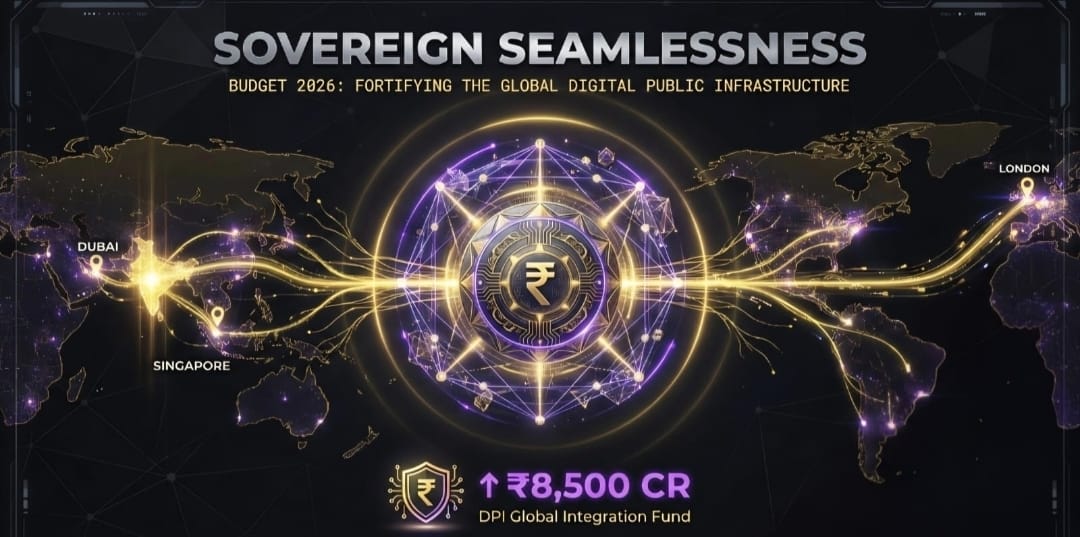
Budget 2026 marks the moment India transitioned from a digital participant to a global infrastructure provider. The ₹8,500 crore allocation for Digital Public Infrastructure (DPI) integration is a calculated strike at legacy financial gatekeepers. It focuses on the convergence of the Digital Rupee with international payment rails. New Delhi is effectively weaponising its tech stack to secure financial sovereignty. Convenience is not the driver here. A calculated strike to shield our cross-border remittances and trade payments from the vulnerabilities of Western-dominated networks is the driving mission.
The Sovereign Settlement Layer
The Digital Rupee is the primary engine of this new autonomy. It bypasses traditional correspondent banking networks that have long dictated the terms of trade. Such architecture allows for instantaneous, blockchain-backed settlement without the latency of Western intermediaries. We are seeing a fundamental rewire of how capital moves across borders. The software is becoming the diplomat. India is now offering other nations a neutral, high-speed alternative to proprietary systems.
Dismantling the Rent-Seeking Core
Legacy financial platforms operate on a rent-seeking model, extracting value through high transaction fees and deliberate settlement delays without adding productive value to the trade itself. These gatekeepers—primarily Western-dominated clearing houses and correspondent banks—maintain a monopoly over the "plumbing" of global finance. Budget 2026 attacks this inefficiency by funding direct, peer-to-peer sovereign settlement. By removing these mandatory middlemen, India reduces the friction—and the implicit tax—on every rupee that crosses our border.
The 2026 Execution Blueprint
The government's plan centres on a multi-stage rollout that moves beyond mere transaction volume. The Budget establishes a dedicated Global DPI Integration Fund to link India's digital rails with the Central Bank Digital Currencies (CBDCs) of partner nations, particularly within the BRICS+ framework. Phase one involves the operationalisation of "Sovereign Payment Corridors" with at least five major trading partners by Q4. Phase two mandates the integration of the Digital Rupee into the trade settlement mechanisms for major commodity imports, reducing dollar dependency.
Exporting the Stack
The global expansion of UPI remains a cornerstone of India's soft power strategy. Budget 2026 provides the liquidity needed to link these domestic rails with international central bank digital currencies. It creates a multipolar financial reality where India defines the rules of engagement. Such an exportable stack is highly attractive to the Global South. It offers a blueprint for digital independence from rent-seeking legacy platforms. India is not just leading the race; it is building the track.
Solutions Spotlight
The focus must remain on deploying an open-source, sovereign settlement layer. Such a protocol allows for near-zero-cost remittances and trade payments between BRICS+ and G20 partners, ensuring India remains the central hub of a new, neutral financial highway. Furthermore, the state should incentivise private FinTech players to develop white-label versions of our DPI for export, effectively turning our domestic success into a primary service export.
Strategy Note
Our narrative must shift from FinTech for inclusion to FinTech for influence. India Front views this as a transition from being a passenger in global finance to becoming the primary infrastructure architect.
Key Takeaway
Sovereign FinTech is India's most potent export. It provides a definitive roadmap for digital independence in a world increasingly defined by financial gatekeepers.
Rishi Vora
Founder and Editor, India Front