
The Green Alpha: 8 Rules for Sovereign Dominance
The ₹33 lakh crore blueprint for the C-suite to secure the India Edge and dictate the velocity of the Global Green Wave.
The climate debate is no longer an environmental issue. It is the most aggressive wealth transfer in modern industrial history. Bharat is not merely riding the Global Green Wave. We are dictating its velocity. The legacy era of importing solar panels and celebrating gigawatt milestones is extinct. It has been replaced by a ruthless pivot toward absolute industrial dominion. A new sovereign mandate has been locked into place. Dominance belongs to those who own the high-tech chemistry, not just the electron. They exploit the 1:4 green multiplier to transform decarbonisation into a primary capital engine. Industrial resilience demands a formal urban mine to insulate against global mineral shocks.
By Rishi Vora, Editor & Publisher, India Front
Rule I: Own the High-Tech Molecule
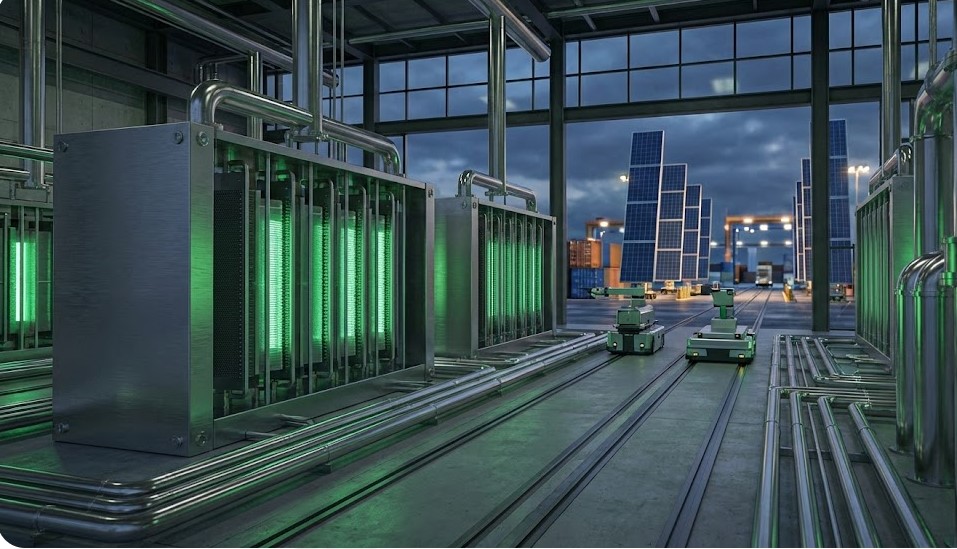
Generating the electron is the baseline. Owning the intellectual property dictates global power. The global capital market remains fixated on solar parks, but the true frontline of industrial sovereignty has moved into the high-precision chemistry of the electrolyser stack. Transitioning from a technology consumer to an infrastructure architect is the primary lever for long-term autonomy. Corporate capital now aggressively funds indigenous R&D to own the membrane, the catalyst, and the molecule itself.
Rule II: Trigger the Capital Engine
Decarbonisation has evolved from a corporate social responsibility initiative to a primary engine for institutional wealth. Budget 2026 has recalibrated the national economic engine, establishing a sophisticated apparatus for capital creation. The C-suite exploits the “Green Multiplier”, where every rupee of public de-risking through Viability Gap Funding triggers a fourfold surge in private equity. By aligning corporate investment with sovereign financial anchors, businesses transform green assets into a highly liquid, market-beating alpha.
Rule III: Institutionalise the Circular Moat
Relying on imported critical minerals is a catastrophic strategic vulnerability. The modern industrial mandate formalises urban mines. E-waste offers mineral concentrations exponentially higher than natural mines, making it the most efficient resource on the planet. Corporate leadership treats battery recycling and mineral reclamation as core industrial infrastructure. Internalising the mineral loop is the only unshakeable defence against geopolitical supply shocks.
Rule IV: Terminate Kinetic Friction
A 14 per cent logistics cost is a massive carbon penalty and an unacceptable tax on corporate margins. The movement of industrial assets is now a competitive advantage. Corporate leadership aggressively integrates supply chains with the multi-modal kinetic grid. Adopting the LNG-to-hydrogen bridge and leveraging the PM Gati Shakti digital brain eliminates physical friction and dwell time. Collapsing logistics costs to a single-digit 9 per cent of GDP serves as a permanent, high-velocity yield for the entire industrial sector.
Rule V: Monetise the Grid Spine
Energy storage is no longer viewed as a depreciating expense. The sheer velocity of the AI Power Cycle demands 24/7 reliability. Institutional capital treats Battery Energy Storage Systems as a highly monetisable grid asset. By exploiting capacity payments and market-based ancillary services, corporations generate revenue by stabilising the grid. Technology exists to transform a dormant cost centre into a generational cash incubator.
Rule VI: Concentrate the Industrial Furnace
The era of dispersed solar farms connected by long-distance transmission is over. The sector has graduated to a logic of industrial concentration. Corporate strategy pivots toward Vande Giga Hubs, co-locating the entire green value chain within a unified footprint. Bundling solar, wind, and production directly at maritime nodes eliminates transmission loss and logistical friction. This zero-loss integration ensures Bharat possesses the most cost-competitive and lethal industrial engine on the planet.
Rule VII: Decouple the Agrarian Base
The volatile fluctuations of imported natural gas completely decouple food security. The C-Suite, which operates in the agricultural and chemical sectors, actively funds the transition to green ammonia and precision nanofertilizers. Internalising the nutrient cycle erases the massive subsidy drain and creates a high-margin export market for sovereign green grains. Treating the fertiliser plant as a modern molecular refinery ensures both national resilience and corporate profitability.
Rule VIII: Architect the South-South Shield
Volume alone is a vulnerable metric. To avoid the legacy trap of green extractivism, Indian corporations are establishing a sovereign economic bloc capable of defining global market terms. The C-suite proactively collaborates with partners across the Global South to build dedicated hydrogen corridors and establish unified certification standards. Negotiating from a position of absolute scale transforms India from a technology taker into the undisputed rules-maker of the global energy order.
Solutions Spotlight
The Green Alpha: Four Immediate Deployment Actions
- • Deploy high-tech electrolyser IP immediately to break hardware dependency—own the membrane, the catalyst, and the molecule
- • Integrate e-highway corridors to ensure continuous charging for heavy-duty electric trucks, vastly improving kinetic velocity
- • Activate urban mines to recover platinum group metals and rare earths natively, insulating supply chains from geopolitical mineral shocks
- • Leverage Vande Giga Hubs at major ports to transform coastal real estate into high-margin export engines for green derivatives
Key Takeaways
- • The climate debate is the most aggressive wealth transfer in modern industrial history—those who own the molecule, not just the electron, dictate global power
- • The 1:4 Green Multiplier is the primary capital engine: every rupee of VGF triggers four rupees of institutional equity
- • The logistics cost at 14% of GDP is both a carbon penalty and a margin tax—collapsing it to 9% is the kinetic competitive moat
- • Energy storage monetised as a grid reliability asset—via capacity payments and ancillary services—transforms BESS from cost to cash incubator
- • The South-South Shield is the only defence against green extractivism—India must be the rules-maker, not the molecule supplier
Strategy Note
These eight rules are not aspirational. They are the operating playbook for the Indian C-suite in the decade of the Green Wave. Execute all eight simultaneously or cede the industrial high ground to the first mover. Bharat is not riding the wave—it is dictating its velocity. The only question is whether your organisation is on the right side of history.