
Fab-ulous Gujarat: Steering India to Semiconductor Pole Position
The Execution Engine. The architect of the Semiconductor Policy and former Principal Secretary (Science & Technology), Gujarat, GoI, Mona Khandhar, decodes the execution blueprint behind Gujarat's rapid silicon ascent.
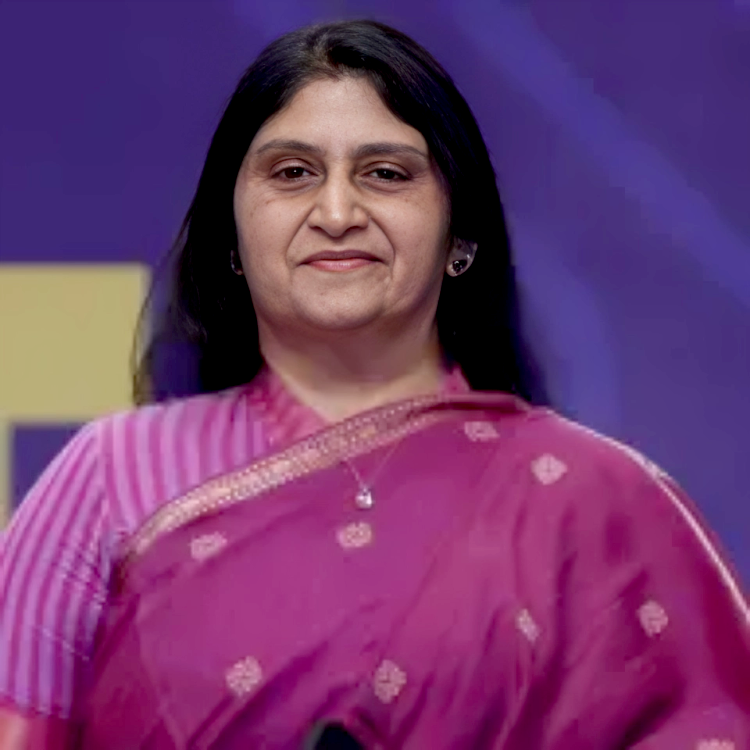
Mona Khandhar
History favours the quick. The debate is over. Gujarat has sprinted. In just under two years, the state has locked in over ₹1.25 lakh crore in semiconductor investments, turning a policy document into a construction boom. The proposal is no longer a plan. It is a physical reality.
Imagine a canvas bigger than Singapore—920 square kilometres of industrial potential in Dholera. While the world searches for the next manufacturing haven, Gujarat has already built it. The state has compressed a decade of evolution into a 24-month execution masterclass. The result? The outcome is a smooth transition to the world's most intricate technology.
Gujarat has answered the global call with absolute precision. By becoming the first Indian state to launch a dedicated Semiconductor Policy for the years 2022 to 2027, Gujarat has moved beyond theoretical discussions. We engaged Mona Khandhar, former Principal Secretary, Department of Science & Technology, Government of India, and the architect behind this transformation, to understand the mechanics of this success. The narrative that emerges is one of synchronised aggression—strategic policy, precision execution, and an unrelenting pace.
The Zero-Friction Promise
The centrepiece of this vision is the Dholera Special Investment Region (SIR). In the world of high-tech manufacturing, "plug and play" is often a buzzword. This idea is now a geological reality in Gujarat. Khandhar outlines a meticulous level of preparation. The state understood early that global fabs cannot wait for land acquisition battles. "In Dholera, we didn't just mark territory; we prepared it," Khandhar asserts. "The land parcels are government-owned, pre-cleared, and litigation-free." This is the ultimate de-risking strategy for global investors.
Building the Infrastructure
Khandhar reveals a three-pronged utility masterplan that rivals any global hub. Water is the lifeblood. Understanding the semiconductor industry's thirst for ultra-pure water, Gujarat has commissioned a dedicated pipeline from the Narmada canal, supported by a 150 MLD water treatment plant. However, the vision extends beyond this. Gujarat has prepared a 20 MLD Common Effluent Treatment Plant (CETP) and plans to advance sewage treatment to tertiary levels, thereby completing the sustainability loop.
Power plays a crucial role. A factory cannot stop operating. Khandhar describes a "100% redundancy model." Dholera is fed by a dual-grid architecture, tapping into both the state and national grids. "The connectivity is commissioned and energised," she notes. "Redundancy is available right at the doorstep cable." Furthermore, the state has synchronised 300 MW of solar power with the grid and has a roadmap to scale the project to a massive 5 GW of renewable energy. This is not just infrastructure; it is climate-compliant industrial design.
Anchoring with Titans
The efficacy of this infrastructure is best measured by the ambition of its tenants. Tata Electronics, in partnership with Taiwan's PSMC, is not just building a factory; they are constructing India's first AI-enabled commercial fab. This ₹91,000 crore behemoth will produce 28,000 wafers per month, targeting the high-volume legacy nodes—specifically 28nm, 40nm, 55nm, 90nm, and 110nm.
Why are they targeting these specific nodes? These are the workhorses of the modern world, powering everything from electric vehicles to power management ICs. By concentrating on these specific nodes, Tata and Gujarat are strategically seizing the majority of global demand, instead of pursuing the unstable frontier.
The Sanand Cluster
While Dholera captures headlines, the Sanand region is quietly evolving into a formidable OSAT cluster. It's not just about Micron. The third pillar of this ecosystem is CG Power, which has partnered with Japan's Renesas and Thailand's Stars Microelectronics to set up a massive ₹7,600 crore facility. This plant is a game-changer for capacity. The CG Power facility, unlike smaller pilot lines, boasts a projected capacity to produce 15 million chips daily. This transforms Sanand from an assembly point into a production hub.
Designing for Life
Perhaps the most understated operational challenge in building a greenfield semiconductor city is the human element. High-tech expats and elite engineers need more than just a job; they need a life. Recognising that Dholera is a new city, the Gujarat government has activated the "Liveability Protocol" to bridge the gap between construction and habitation.
To solve the immediate housing crunch for the influx of global experts, the state is facilitating the construction of 1,500 serviced apartments within the SIR. Simultaneously, Tata Electronics is developing its own residential township with 530 units. But the masterstroke is the creation of a global "Tent City"—a rapid-deployment, high-quality hospitality zone designed to host visiting engineers and technical consultants immediately, ensuring that the lack of hotels never slows down the mission.
Building the Supplier Village
A fab cannot stand alone. It needs a village of suppliers. Gujarat is actively building this "Tier 2" ecosystem through a cluster development model. Khandhar highlights the natural advantage Gujarat already holds as India's petrochemical capital. "We have a strong presence of gas, chemicals, and engineering industries," she notes. "The potential to localise the supply chain is immense."
The strategy is deliberate co-location. This is already bearing fruit. Inox Air Products has committed ₹500 crore to build an ultra-high purity gas facility in Dholera, specifically to feed the Tata Electronics fab. Similarly, local giants like Gujarat Fluorochemicals are leveraging their expertise in fluoropolymers to supply critical materials. Furthermore, reports indicate that over 30 Japanese suppliers are currently evaluating or setting up units in the state. This initiative transforms Gujarat from a single-point anchor into a self-sustaining industrial organism.
Speed as Strategy
If Dholera is the hardware, the Gujarat State Electronics Mission (GSEM) is the operating system. Bureaucracy often kills speed, but Khandhar describes GSEM as a "Nodal Accelerator" designed to bypass red tape entirely. "We have synergised completely with the Government of India," Khandhar explains. "All process duplication has been avoided. GSEM acts as the single point of contact."
The system is a profound administrative innovation. Instead of running between ministries, investors interface with one empowered entity. Automated escalation mechanisms and weekly coordination meetings guarantee the elimination of delays. This concept is "ease of doing business" reengineered as "speed of doing business."
Human capital is the final component that completes the puzzle. Gujarat cranks out more than 100,000 STEM graduates each year, but the focus has shifted to hyperspecialisation. Khandhar outlines a "hub and spoke" skilling architecture that creates a direct pipeline from the classroom to the cleanroom. She cites the groundbreaking ATMP Training Centre at Pandit Deendayal Energy University (PDEU)—a first-of-its-kind collaboration with Micron and NSDC to train 1,000 professionals specifically for the packaging industry.
The Gujarat model is an operational masterclass. The state has shifted the paradigm from signing MoUs to breaking ground. By pre-empting the complex needs of the future, Gujarat has rewritten the contract between government and industry. The silence of the Dholera plain has been replaced by the hum of industry. As the first chips prepare to roll out, they carry a message to the world: Gujarat is no longer just ready. It has arrived.
Strategy Note
The government's top priority should be requiring and rewarding Indian conglomerates to hire or train the right people, processes, and systems to operate technological transfers.
India must also promptly implement a talent development plan to produce 300,000 skilled workers in ten years.
Key Takeaways
- Redundancy is Reliability: In chips, a power cut is a disaster. Gujarat's dual-grid architecture and water recycling loops offer the 100% uptime guarantee that global majors demand.
- Talent Inventory: Infrastructure is not just concrete; it is people. By launching specialised semiconductor courses at PDEU and IIT Gandhinagar, the state is building a "human inventory" to match its industrial one.
- Soft Infrastructure Matters: You cannot build a high-tech city without high-tech lifestyles. The focus on "Liveability"—housing, schools, and recreation—is critical to retaining the elite workforce that will run the fab.