
The Warehouse Problem
"The data centre without the IP is a warehouse."
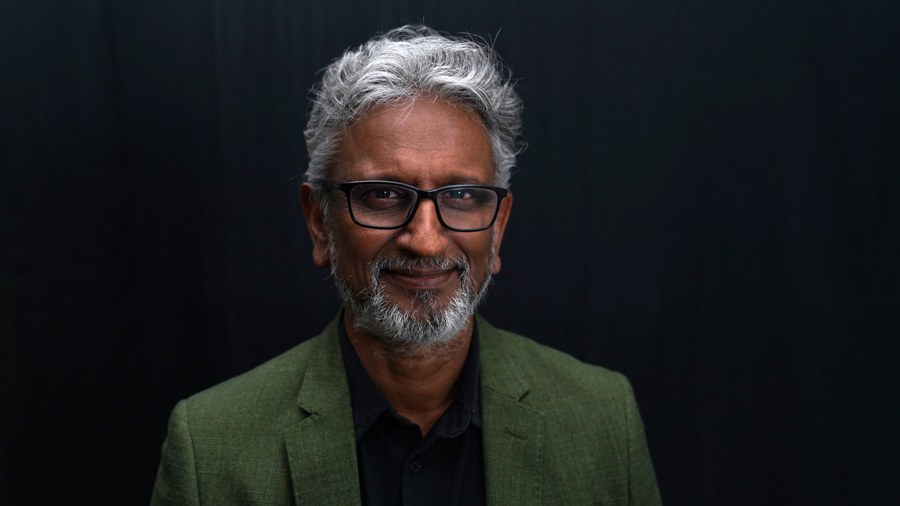
India's AI infrastructure debate frequently begins with real estate, power grids, and cooling towers. Raja Koduri begins one layer below. To him, the harder question is whether India will own the architecture inside the facilities it builds.
Land, power, and cooling create capacity. GPU architecture captures the margin. The error is to mistake visible infrastructure for owned value. Build the data centre while importing the GPU architecture, and value exits through the silicon stack. The building matters. The owned layer decides who earns.
India can own the AI future by building the compute IP it runs on.
IP TURNS CAPACITY INTO VALUE
The Architecture Layer
The mobile internet scaled across the world because CPU IP became a licensable asset. ARM decoupled the processing core from the final device. Global manufacturers built differentiated hardware on top of a shared, licensable foundation.
Koduri's argument is that the GPU ecosystem lacks this kind of licensable layer. Compute value remains concentrated inside proprietary architectures. The much-debated CUDA moat is largely misunderstood as a pure software advantage. It is fundamentally an architecture problem. NVIDIA co-architected its hardware and software. Those foundational assumptions have now settled into developer libraries, frameworks, and everyday AI workflows.
For India, AI sovereignty runs deeper than chip sourcing. It means shaping the assumptions embedded across the software ecosystem — from architecture to the frameworks and workflows developers build on. That is why the lock-in is hard to see from the application layer. A default becomes power when users stop seeing it as a choice.
"You can't solve an architecture problem with a software-only response," Koduri notes.
The required ownership lever is a licensable compute architecture. In Koduri's model, OxCore and OxPython serve as the compute core and compatibility layer designed together. The larger point is the model: a licensable architecture that lets others build.
This mechanism allows design teams to integrate GPU-compatible cores into their own systems without the multi-year distraction of rewriting the global software stack. The strategic asset is not the finished chip. It is the licensable foundation that lets the domestic ecosystem build.
DOCTRINE
LICENCE LAYER CAPTURES RENT
Ownership compounds when others build on what you own.
The Energy Path
AI infrastructure operates as a conversion system.
Electrons enter. Tokens exit.
Energy is not a side cost. It is one of the variables that decides AI economics at scale. Energy becomes part of ownership when the compute system is designed from generation to token. A national renewable energy advantage becomes a compute advantage only when energy and compute are architected as one stack.
Follow the electron, and the waste becomes visible. Solar is DC. The grid forces AC. The data centre converts back to DC. Each conversion wastes energy. Each conversion creates heat. The bottleneck is not the sun. It is the path between the photon and the transistor.
Integrating utility-scale renewable generation more directly with compute clusters can reduce avoidable conversion penalties. The future AI stack will be measured in tokens per rupee, not merely teraflops per chip.
The Packaging Layer
Advanced packaging presents a high-value, IP-heavy entry point into compute ownership, one India can pursue without a leading-edge wafer fab.
That does not make the layer easy. Advanced packaging still demands cleanrooms, substrates, thermal discipline, precision tooling and yield control. It is not an easier layer. It is a different layer to own.
"The people who talk the most about chiplets are the ones who haven't done them yet," Koduri states.
Heat, signal integrity, power delivery, and micro-alignment present hard engineering thresholds. The thermal load generated by one chiplet threatens the adjacent die. Advanced packaging is not a shortcut around difficulty. It is the exact difficulty India must learn to own.
The value is in making chiplet architectures yield. Announce chiplets without owning packaging yield, and the margin exits through the integration layer. Repeatability is where operational know-how hardens into durable ownership.
The Future Layer
Compute ownership is available to India in the layers still being defined. The mature layers are entrenched. The future layers remain open.
The entire silicon industry is colliding with hard physical limits in conventional memory architectures. Moving data between compute and memory dictates the dominant energy and latency costs in AI inference. The strategic leverage sits in new memory structures, near-memory computing, in-memory computing, and photonic interconnects.
These innovations attack the energy penalty of moving bits electrically. IP close to physics survives software fashion.
Agents will evolve. Models will churn. The physical constraints of energy per bit and memory bandwidth will persist.
PHYSICS OUTLASTS SOFTWARE
The next advantage may come from entering the memory, interconnect and packaging layers while they are still being formed. The future margin belongs to the country that secures the physics layer before it becomes a foreign default.
The Talent Shift
India's engineering depth is proven. The next step is pairing it with original architecture mandates.
Silicon Valley's builder density thrives because talent is continuously deployed against fresh challenges. Renting foreign architecture restricts engineers to implementation. Owning architecture lets engineers originate.
The distinction is simple: Indian engineers should not sit downstream from architecture decisions made elsewhere. The ecosystem does not need cheaper engineers. It needs harder problems.
Building gigawatt-scale AI infrastructure under strict cost parameters demands absolute engineering rigour. Talent becomes a strategic asset only when it works on original architecture. The Indian engineer must shape the core, not simply service the periphery.
The Human Stack
Raja's final bet sits outside the silicon die.
"AQI is more important than AI for India," Koduri asserts.
Clean air and clean water are not soft issues in a talent economy. The strongest semiconductor mission still needs people who can live where the work is done. The human stack is the prerequisite for the compute stack.
Own the stack. Build the city. Give the next Ramanujan something real to work on — and air clean enough to work in.
Ownership Law
ARCHITECTURE OWNS THE FUTURE
Strategy Note
Build The Compute Ownership Layer
The shift from capacity provider to architecture owner starts with three pivots: licensable GPU IP, advanced packaging yield, and physics-layer innovation.
India does not need to wait for mature fabrication pathways to capture every layer of compute value. It can build leverage in the integration layer, where thermal behaviour, signalling, test discipline and repeatability decide whether chiplets become systems.
The energy layer matters too. Reducing conversion losses between renewable generation and compute clusters can help turn India's renewable capacity into a cost-per-token advantage.
COMPUTE OWNERSHIP IS THE STACK
More from Issue 5 · Own the IP