
From Silos to Synergy: How PM Gati Shakti Is Reshaping India's Economic Landscape
Sumita Dawra is the former Special Secretary (Logistics) with the Ministry of Commerce and Industry, Government of India. A new force is at work in India's economy, one that is systematically dismantling decades of fragmentation.
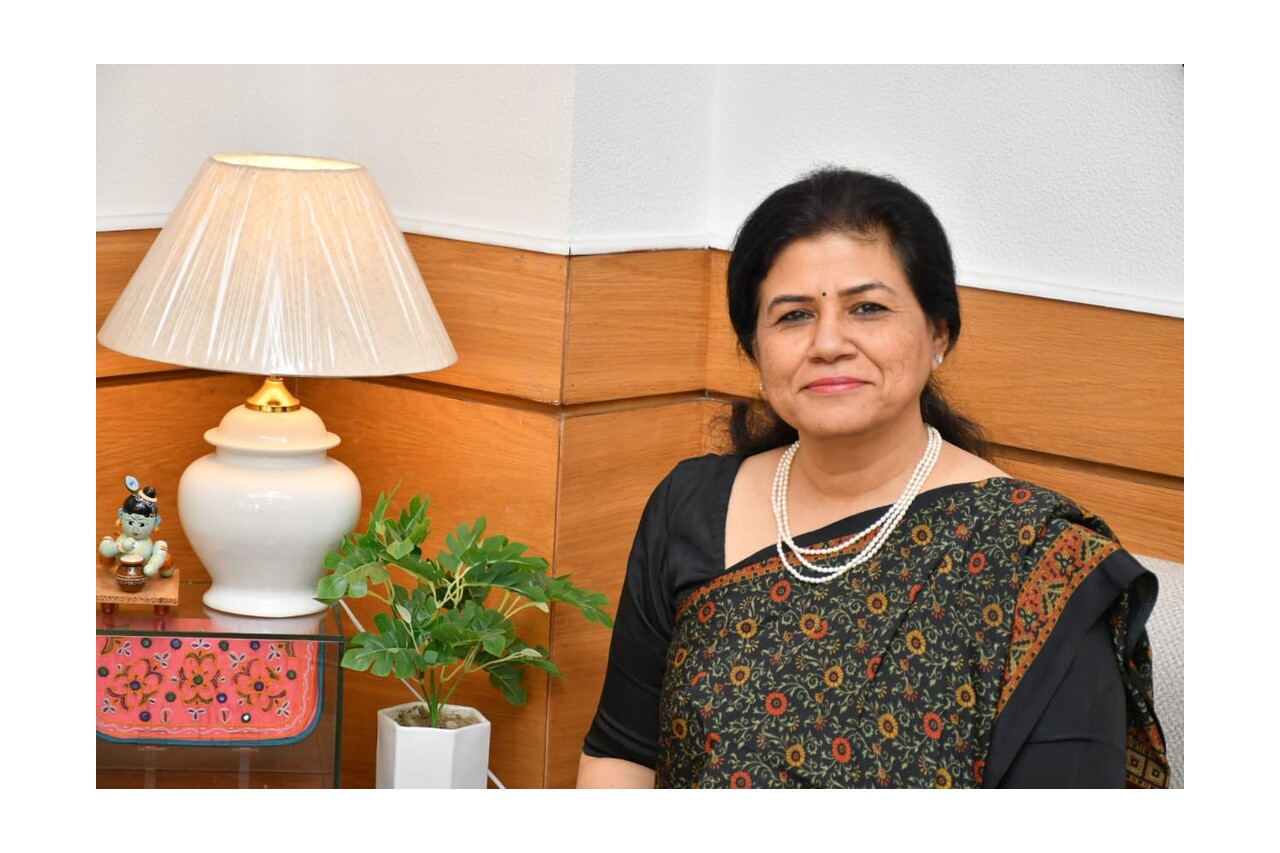
Sumita Dawra
The PM Gati Shakti National Master Plan is a strategic effort to build a unified future. Its purpose is to bring a foundational transformation, unleashing India's true economic potential. Sumita Dawra, former Special Secretary (Logistics) to the Government of India, provides an expert's insight into this monumental project, explaining how a single, unified platform is making ministries more efficient.
The geospatial digital platform PM Gati Shakti NMP is transforming infrastructure planning and construction in India. Dawra states, "PMGS is a GIS-based portal that integrates data layers from various ministries and states across the country, providing a digital, data-driven interface. With PMGS, it is feasible to digitally visualise and scientifically plan multimodal infrastructure connectivity nationwide." The platform encompasses roads, railways, waterways, airports, electricity, telecom lines, industrial parks, schools, and aanganwadis throughout the country.
She explains that PMGS effectively connects various aspects of infrastructure. "Consider the 200 new schools that are being planned in the villages of Uttar Pradesh, which is India's most populous state," she notes. The portal enables the state to identify infrastructure gaps, locate vacant land, and assess its suitability based on proximity to homes, roads, electricity, water, the internet and other forms of connectivity. This functionality simplifies the process of selecting land for schools and allows for planning that aligns with the needs of the local community.
Corridor Planning Excellence
The plan supports corridor planning. "The Ministry of Railways wants to identify overcrowded and weak railway lines," she says. The PMGS portal can help it find railway lines that need strengthening, like a third parallel line for more people and goods. To relieve congestion on the Howrah-Chennai main railway line, the Bhadrak-Vizianagaram railway line will be strengthened to move coal and other minerals to Paradip, Dhamra and Vishakhapatnam on India's eastern coast. She describes this as a "revolutionary, transformative approach to planning infrastructure projects in India."
"PMGS plans streamline infrastructure projects, eliminate duplication, integrate transportation, and prioritise infrastructure-gap projects. PMGS planning connects industrial clusters to markets via roads, railways, waterways and airways. The Indian Network Planning Group has approved over Rs 16 trillion in projects in two years," she says.
Breaking Silos for Synergy
The launch of PMGS in October 2021 was a direct effort to break silos among different departments and bring synergy to infrastructure development. "The PMGS was launched to create a connected infrastructure that improves travel and transport for people and goods," she states. The platform is a complete online tool with more than 1600 data layers, including national and state highways, train systems, seaports and waterways, mobile phone towers and internet cables, power lines, gas pipelines, and other social infrastructure.
She highlights that the visibility of these data layers facilitates planning ministries to select the required data layers and plan infrastructure, saving months of delays. She emphasises the benefits of spatial planning, including faster and cheaper implementation, data-driven decisions, not building unnecessary infrastructure, encouraging shared resource use, and better coordination, which reduces carbon emissions, distances and costs.
Logistics Efficiency Revolution
Dawra explains the plan's true power in improving logistics efficiency. Infrastructure planning in the National Logistics Policy (NLP) 2022 supports the PMGS and lowers logistics costs by increasing multimodal connectivity. The PMGS NMP is planning economic township infrastructure on the National Industrial Corridors, including twenty industrial smart cities like India's semiconductor city Dholera, Shendra-Bidkin, Tumukuru, and Vikram Udyogpuri. The PMGS portal will link raw materials, labour, and finished goods for cost-effective logistics.
She says PMGS planned the Bhimnath-Dholera rail link to connect major ports and the Western Dedicated Freight Corridor. "The Indo-Nepal Haldia Access-Controlled Corridor will enable quicker movement of goods and maximise logistics efficiency, cutting travel time by 11–12 hours. A single bridge at the Jogighopa Multimodal Logistics Park in Assam will reduce the distance travelled by 90%—from 205 km to a mere 20 km—and reduce travel time by six and a half hours," she asserts.
Future-Ready Infrastructure
While PMGS has promoted a revolutionary change in planning, its future growth requires addressing new challenges. Dawra suggests that key interventions can add a lot of value. These include the use of technologies and AI as optimisation tools, as well as involving startups working on innovative logistics ideas. She believes this will go a long way in bringing in creative ideas and driving productivity and efficiency in the sector.
She also stressed the plan's ability to address future trends. "The PMGS NMP has the capability to successfully plan for the rise of electric vehicles and other new energy-powered vehicles." She adds that in the future, global infrastructure projects such as the India–Middle East-Europe Economic Corridor (IMEEEC) could well be planned on PMGS – spanning land, rail, and sea and linking continents and promoting ease of logistics for enhanced trade and economic integration.
Solutions Spotlight
- •Unified Vision: PM Gati Shakti provides a single, digital platform that breaks down silos and promotes a 'whole-of-government' approach to infrastructure planning, ensuring projects are efficient and synergistic.
- •Data-Driven Decisions: The platform's extensive 1600+ layers enable informed decision-making, leading to optimal project alignments, reduced costs and faster implementation.
- •Multimodal Integration: The plan is focused on a corridor-based approach to planning, ensuring that roads, railways and ports are seamlessly connected to reduce last-mile gaps and boost logistics efficiency.
- •Forward-Looking Strategy: The government is actively working on integrating advanced technologies like AI and engaging with the startup ecosystem to prepare for future logistical trends and make the entire supply chain more agile and resilient.