
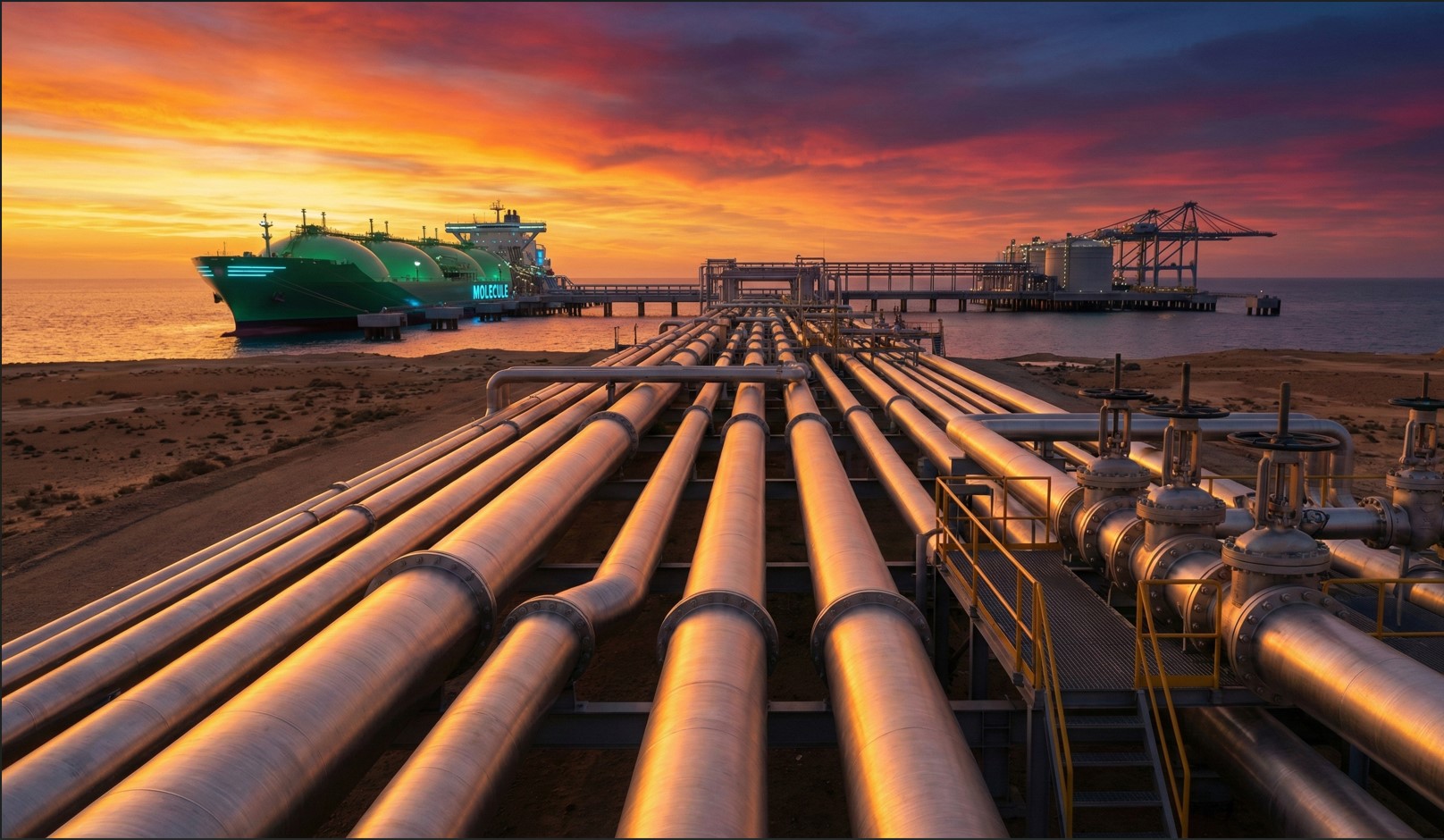
India’s evolution into a global energy powerhouse reaches its most critical phase as the nation successfully engineers the midstream infrastructure required to anchor the green hydrogen economy. Establishing a 5 million metric tonne production capacity by 2030 necessitates a physical nervous system capable of moving a notoriously difficult molecule to contain. Recent milestones demonstrate that India is no longer just a participant in the green energy space; the nation is defining the technical and logistical standards for the entire planet. Success in this sector transforms the energy transition from a series of high-level goals into a tangible, high-velocity industrial reality. Strategic leadership in logistics ensures that India remains the most cost-competitive hub for green molecular exports, securing a definitive advantage in the emerging global trade corridors.
The presence of direct authority from the captains of industry provides the necessary commercial weight to this roadmap. TV Narendran, CEO & MD of Tata Steel, notes that transitioning from coal to gas to hydrogen represents a complex challenge that requires a solution beyond a simple “silver bullet”. His perspective underscores that the journey has started in earnest, and the industry is already moving from experimental trials toward giga-scale infrastructure. Minister Hardeep Singh Puri echoes this sentiment, observing that India’s next big energy leap is already here, with the nation poised to become a global champion in production and exports. These leadership insights frame the logistics spine as a pillar of energy security and economic competitiveness.
The Metallurgical Moat
Solving the challenge of hydrogen transportation begins with a breakthrough in material science. Standard steel pipelines face a structural risk known as hydrogen embrittlement—a process where hydrogen atoms penetrate the metal lattice, causing it to become brittle and prone to cracking under high pressure. TV Narendran has positioned Indian engineering at the forefront of this solution by overseeing the development of India’s first hydrogen-compliant API X65 grade steel pipes. “The industry is growing, and we need to transition to greener process routes,” he observes, highlighting that steel itself will be essential for the transition to hold solar panels, windmills, and pipelines. These Electric Resistance Welded (ERW) pipes are designed to transport 100 per cent pure gaseous hydrogen at high pressures of up to 100 bar, surpassing the metallurgical limits of existing gas grids.
Industrial demand for hydrogen-compliant steel is projected to surge to 350,000 tonnes over the next five to seven years. Tata Steel’s ability to deliver these specialised grades domestically provides a significant cost advantage for the rollout of national pipeline networks. High-pressure testing conducted by globally recognised agencies confirms that Indian steel meets the most rigorous safety and operational standards in the world. Establishing this metallurgical moat allows the nation to scale its midstream infrastructure with confidence, knowing that the physical pipes are engineered for decades of safe, high-capacity operation.
The Maritime Nerve Centre
The next layer of logistical sovereignty comes from transforming the Indian coastline into a series of integrated green hydrogen hubs. Hardeep Singh Puri has identified the development of maritime hubs at Kandla, Paradip, and Tuticorin as the primary anchors for India’s export ambition. “India is building trust in every molecule of hydrogen,” the minister states, pointing to the Green Hydrogen Certification Scheme as a mechanism to ensure exports carry unquestioned commercial weight. These ports are evolving from traditional gateways into production-and-export powerhouses. Deendayal Port in Kandla has already allocated 3,400 acres of land to industrial giants for the production of over 5.5 million tonnes of green hydrogen and green ammonia. Developing integrated ecosystems where production, storage, and shipping occur in a single location eliminates the cost and complexity of long-distance inland transport.
Strategic positioning along the world’s most critical trade routes gives Indian maritime hubs a geographical edge that few other nations can match. Paradip Port on the east coast serves as the primary gateway to the high-growth markets of ASEAN and East Asia, while Kandla on the west coast connects India directly to the energy-hungry economies of Europe and the Middle East. Ensuring that these ports are hydrogen-ready involves more than just storage tanks; it also requires the installation of specialised bunkering facilities and the electrification of port operations. V.O. Chidambaranar Port in Tuticorin is already leading this transition with a pilot green methanol bunkering facility and dedicated electrolyser zones. Orchestrating these maritime nodes into a unified export spine allows India to define the pace of the global molecule trade.
The Hub-and-Spoke Blueprint
Logistical efficiency in the hydrogen age relies on a cluster-based development model that co-locates production with high-volume demand. Gurdeep Singh, CMD of NTPC, emphasises that the utility giant will play a leading role in the country’s energy transition, aiming for 60 GW of renewable capacity by 2032. His blueprint for the ₹1.85 lakh crore Pudimadaka Green Hydrogen Hub near Visakhapatnam serves as the model for giga-scale integration. A facility of this scale integrates 20 GW of renewable energy capacity with advanced alkaline electrolysers to produce 1,500 tonnes of green hydrogen per day. Co-locating the generation of renewable power with the manufacturing of green molecules solves the primary problem of transmission loss and grid congestion. Building dedicated pipeline corridors that link these giga-hubs to deepwater terminals ensures a zero-loss transmission of energy from the solar farm to the ship’s hull.
Infrastructure Velocity
Delivery of the National Green Hydrogen Mission reaches its zenith through a relentless focus on infrastructure velocity, transforming 2026 into the definitive year of execution. Realising the 2030 ambition involves a sophisticated, multipronged architecture that has moved beyond pilot phases to giga-scale realities. Standards for engineering high-pressure hydrogen pipelines have been set to ensure they can work together across the country. With support from the Petroleum and Natural Gas Regulatory Board (PNGRB), its plan for 2026 to upgrade the existing 35 strategic maritime hubs at Kandla, Paradip, and Tuticorin has been successfully implemented as integrated production and export zones, effectively positioning India as the primary refuelling station for the Rotterdam-India-Singapore green shipping corridor.
Establishing dedicated hydrogen valleys—innovation clusters that co-locate electrolyser production with industrial offtakers in the steel and fertiliser sectors—has turned the geographical distance between supply and demand into a competitive moat. Using a single financial plan, which includes extending the waiver for Inter-State Transmission System (ISTS) charges until 2030, has helped secure the expected ₹8 lakh crore in private investment. Simplification of the logistical chain ensures that green molecular energy moves with the same commercial ease as natural gas, removing the final barrier to mass industrial adoption.
The Execution Summary
The roadmap to 2030 is secured through five critical industrial milestones: the standardisation of the national high-pressure gaseous grid to bypass the 15 percent blending limit; the full commissioning of the Pudimadaka and Kandla gigahubs as export launchpads; the successful deployment of India’s first 200-kilometer-long dedicated hydrogen pipeline; the activation of specialised bunkering facilities across the major maritime corridors; and the final integration of the SIGHT-incentivized domestic electrolyser supply chain into these logistics nodes. Achieving these milestones allows India to manage the global energy order from the terminal to the tank. Autonomy over the logistics of the molecule remains the ultimate competitive advantage. Early movers in infrastructure own the market, the routes, and the standards.
Solutions Spotlight
Five Velocity Vectors: Engineering the 5 MMT Midstream Spine
- • Standardise the national high-pressure gaseous grid to bypass the 15% blending limit, enabling pure hydrogen transport at scale
- • Fully commission the Pudimadaka and Kandla gigahubs as export launchpads, each designed as an integrated production and export zone
- • Deploy India’s first 200-km dedicated hydrogen pipeline connecting the production hinterland to maritime export terminals
- • Activate specialised bunkering facilities across the Rotterdam-India-Singapore green shipping corridor
- • Integrate the SIGHT-incentivized domestic electrolyser supply chain into all logistics nodes for a complete, sovereign midstream
Key Takeaways
- • India is no longer a participant in the green hydrogen space—the nation is defining the technical and logistical standards for the planet
- • TV Narendran’s API X65 hydrogen-compliant steel pipes are the metallurgical moat: indigenous IP built for the logistics spine
- • Hydrogen valleys co-locating electrolysers with steel and fertiliser industrial offtakers are the competitive moat of the decade
- • Infrastructure velocity—not production targets—determines first-mover advantage in global green hydrogen trade
- • The ISTS waiver extension to 2030 anchors the projected ₹8 lakh crore in private investment into the green hydrogen mission
Strategy Note
The 5 MMT target by 2030 will be won or lost in the midstream. Every month of delay in the Green Energy Corridors and maritime hubs commissioning costs India one fewer year of first-mover advantage in the global green hydrogen economy. Build the spine before the market arrives, not after.