
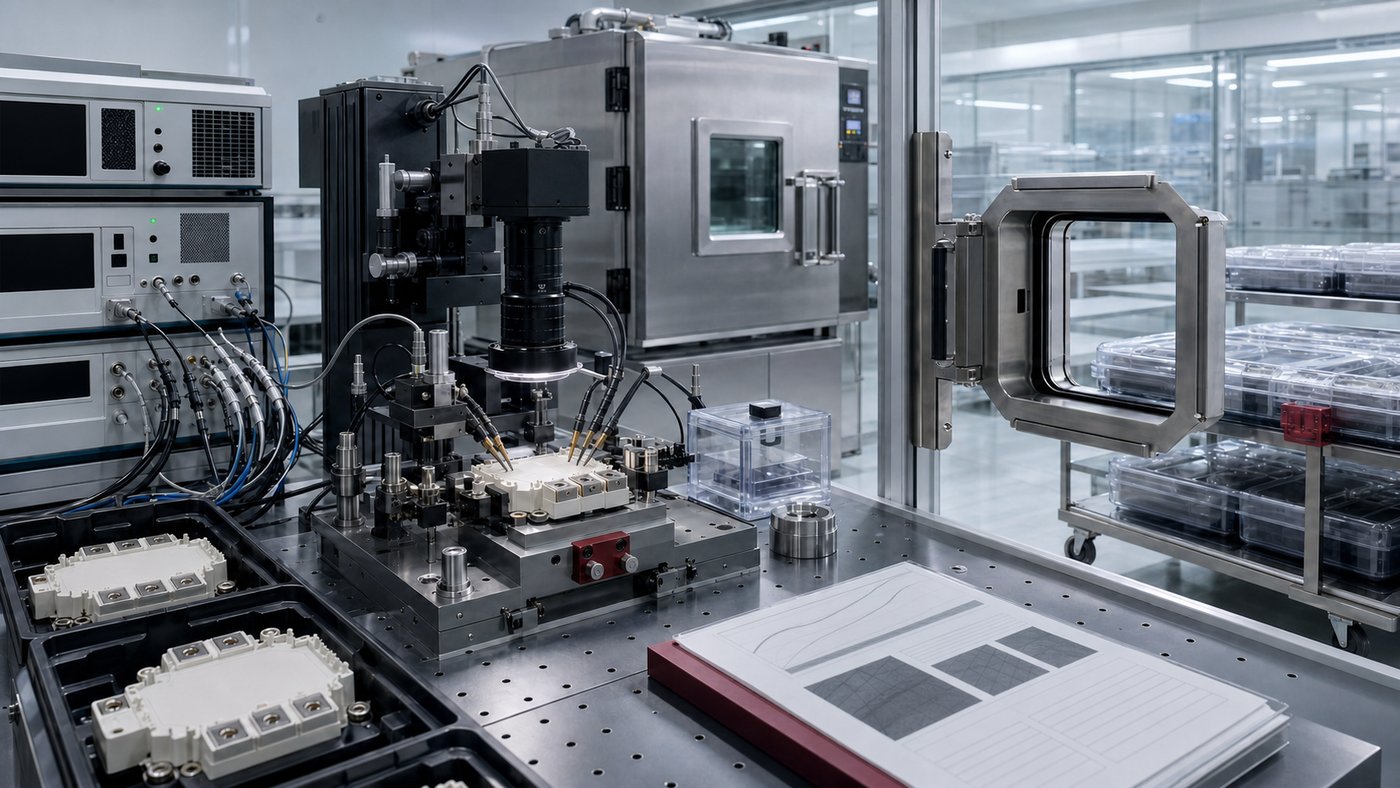
The Gate After Production
India can build more. That is no longer the only question. The harder question is whether what India builds can clear the buyer, the regulator, the hospital, the fab, the audit team and the export market. A product leaves the factory only when the acceptance system clears it: the lab, the audit, the certificate, the regulator, the buyer. Production is the first test. Validation is the second.
When Output Is Not Enough
Manufacturing output and market acceptance are different tests. Correct engineering still fails commercially when validation around it is weak. Certification is market permission. It is the gate between domestic output and serious market acceptance.
In high-tech sectors, buyers do not evaluate claims. They evaluate test results, validation records, audit trails, and reliability data. The buyer is purchasing proof along with the product: performance records, survival under stress, compliance, and a credible failure trail. When a procurement head signs a purchase order, they are transferring liability. That liability must be absorbed by a verifiable certificate. If the certificate holds no weight, the transaction dies before the contract is even drafted.
The Semiconductor Test
The rule is clearest in semiconductors. Here, acceptance is built through process discipline and qualification. Metrology, reliability testing, thermal performance, contamination control, and failure analysis define the perimeter of market entry. A substrate, component, die, or package cannot enter serious semiconductor supply chains merely because it is manufactured. It must be qualified. Without qualification, the product remains outside the approved vendor list, no matter how capable the factory looks.
A semiconductor supply chain cannot absorb an unverified variable at scale. Data must prove that the component behaves as modelled under thermal and electrical stress. In semiconductors, the certificate is not an administrative formality. It is the passport into the supply chain. Without that passport, even advanced output remains outside serious customer programmes.
The Aerospace Test
Aerospace makes the rule colder. A component is not accepted because it has been machined well. It is accepted when the material record, process route, inspection data, supplier approval and failure documentation can survive the customer audit.
A turbine blade, actuator, sensor housing or structural component carries more than a tolerance claim. It carries an airworthiness claim. The buyer is not only asking whether the part was made. The buyer is asking whether every step behind the part can be traced, repeated and defended.
Cost advantage disappears the moment airworthiness confidence is questioned.
The same logic appears in medical devices, where clinical reliability decides whether a product can enter a hospital. It appears again in EV batteries, where safety certification, degradation data and failure records decide whether the product is accepted into fleets. In every serious sector, acceptance follows proof.
India's Validation Gap
This exposes the structural bottleneck in India's current industrial trajectory. The manufacturing push is moving into complex sectors where global buyers demand proof before they commit to scale. Cost advantage and policy incentives may attract production. They cannot substitute for accepted proof. India must build validation systems that global buyers can accept at scale.
The missing layer is not one institution. It is the validation chain itself: labs buyers accept, tests that match sector risk, records that survive audits, traceability that follows the batch, and failure data that tells the truth.
The gap is now the constraint. Industrial capacity is scaling faster than the testing and certification infrastructure required to validate it. When production outpaces validation, the resulting output has nowhere to go. A product that cannot be trusted by a lab, a regulator, a premium buyer or a hospital network remains trapped inside the factory gate.
Build The Validation Layer
This gap will not close through circulars. It will close through labs, records, testing depth and audit discipline. India needs a network of trusted certification labs capable of sector-specific reliability testing at global standards. Metrology cannot remain exceptional. Digital traceability has to enter the manufacturing floor from day one. Audit-ready documentation should exist before inspection begins, not after a buyer asks for it. One weak node breaks acceptance.
The Acceptance Chain
Product → Test → Certificate → Audit → Trust → Market
The next decade of high-tech manufacturing will depend on whether this chain works at scale. Factory volume will matter. Acceptance will decide how far it travels.
Production makes the product. Certification makes it acceptable. Until the certificate is trusted, the product is still waiting at the gate.
More from Issue 5 · Own the IP