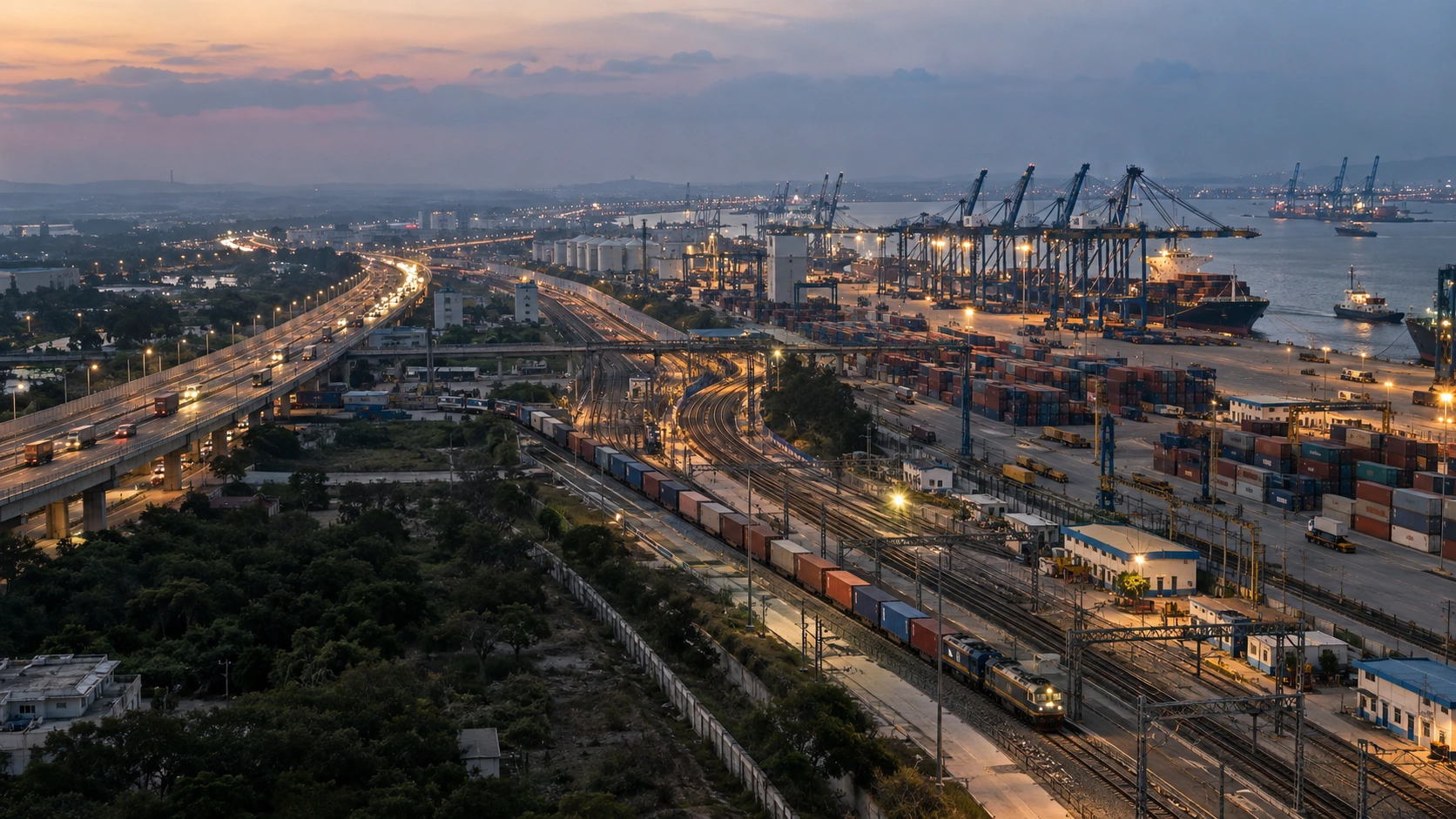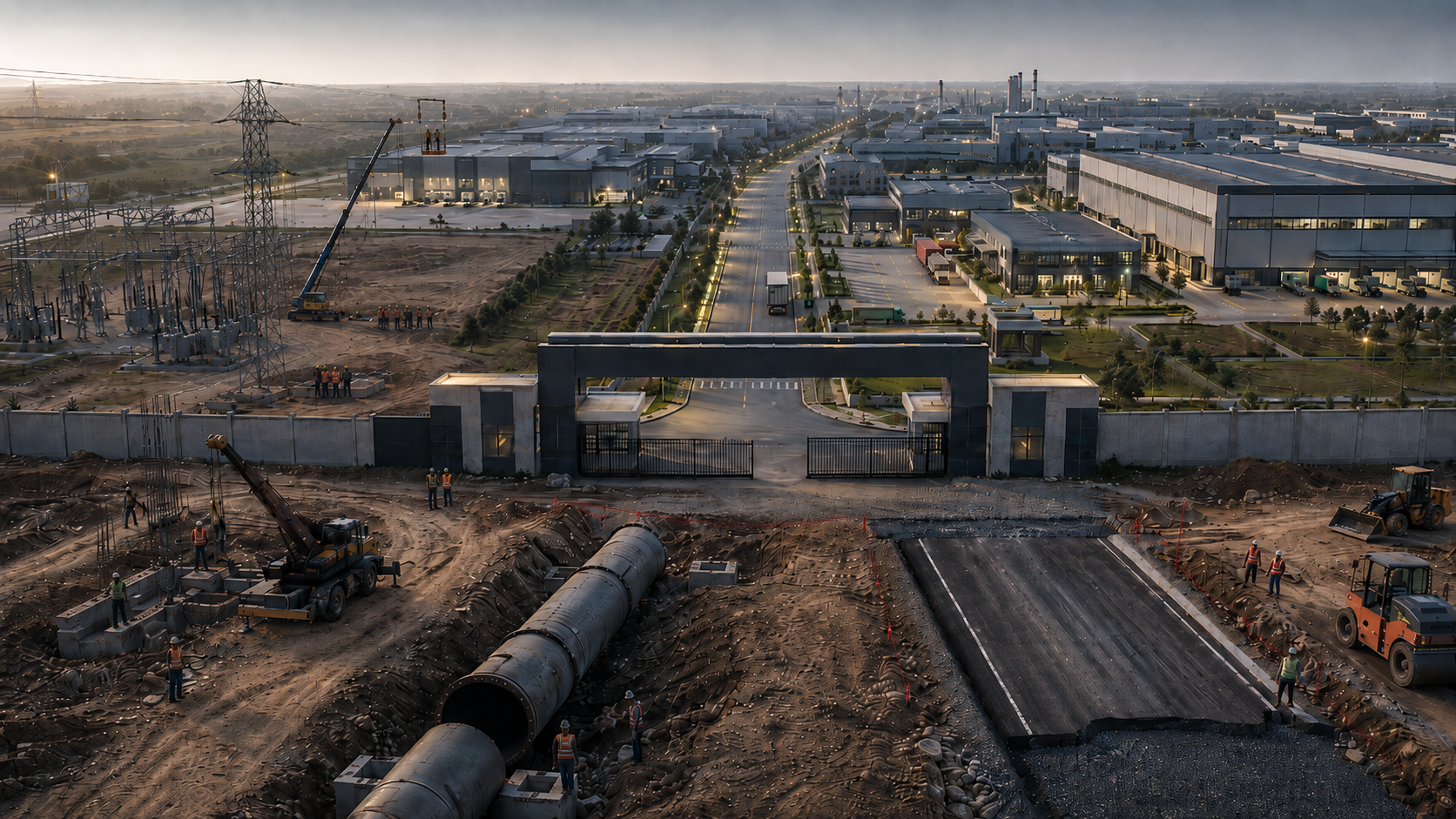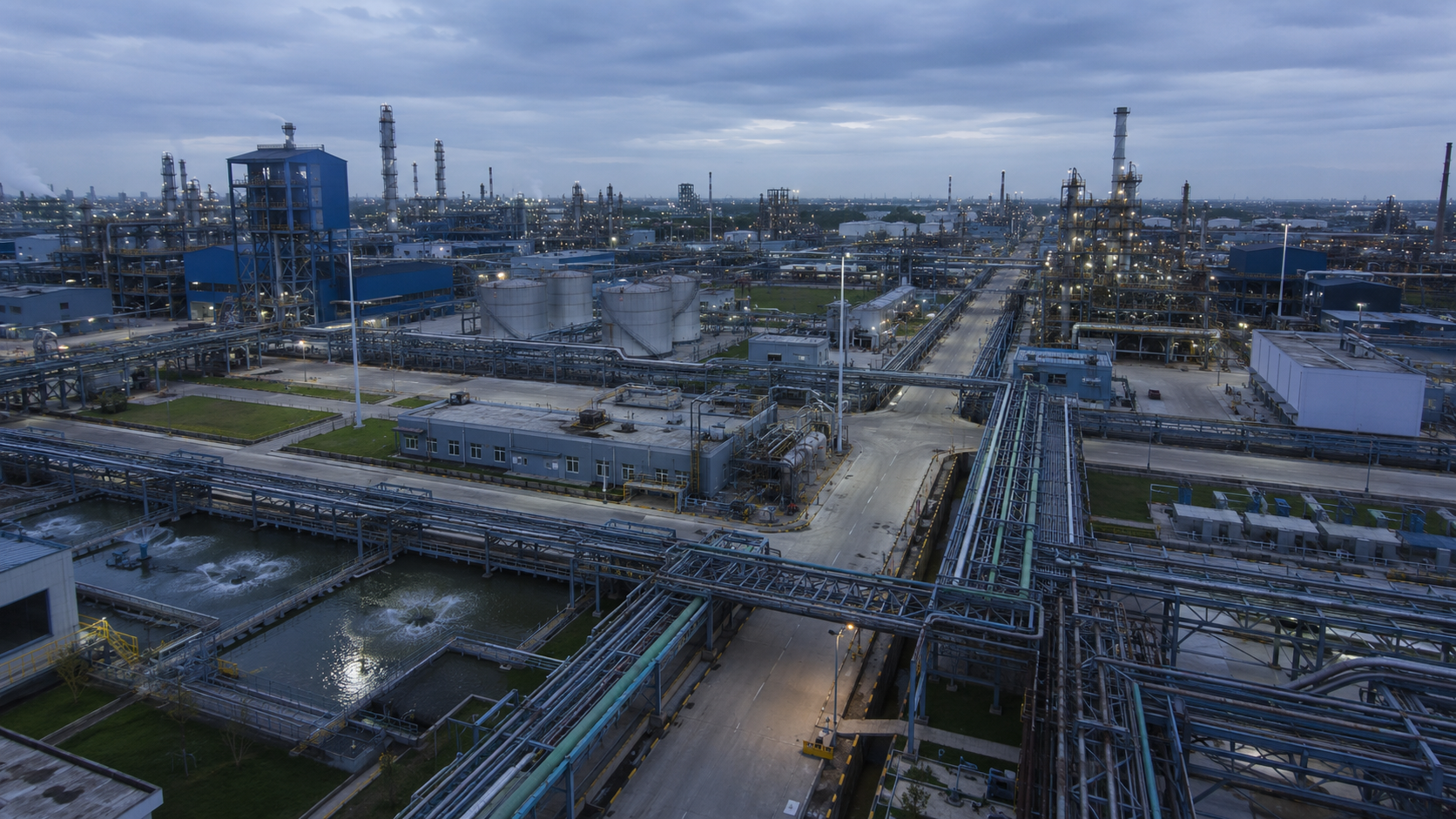
Factory scale is decided outside the gate — corridor by corridor.
Inside the factory, things work. Output meets spec. Yield holds. Production cycles are tighter than they’ve ever been. For most large manufacturers, the system inside the gate is no longer the problem.
The failure starts after.
India didn’t run into a production ceiling. It ran into a delivery one.
The Missed SLA
A delayed container doesn’t miss a deadline. It erases the margin. For electronics manufacturers, freight volatility now determines profitability.
A shipment delayed in transit doesn’t arrive late—it arrives irrelevant. Delivery windows are contractual. The order is not renegotiated. It’s replaced.
In practice, the shipment loses its economics. The factory didn’t fail. The system outside it did.
The Cascade
Factories don’t compete on cost alone. They compete on certainty. Global supply chains are built around predictability. A manufacturer that hits a delivery window every time will beat one that’s slightly cheaper but inconsistent. At scale, variance is more expensive than cost.
That’s the part most industrial policy misses. The requirement isn’t just efficiency—it’s reliability, measured over time, under stress. Once corridor reliability weakens, delivery becomes probabilistic. That breaks the first condition for participation in global supply chains.
The system doesn’t adjust. It resets. Contracts move immediately. Buyers don’t price in uncertainty. They route around it. Without contracts, scale does not build. If corridor reliability fails, manufacturing doesn’t degrade—it exits.
The Hedge
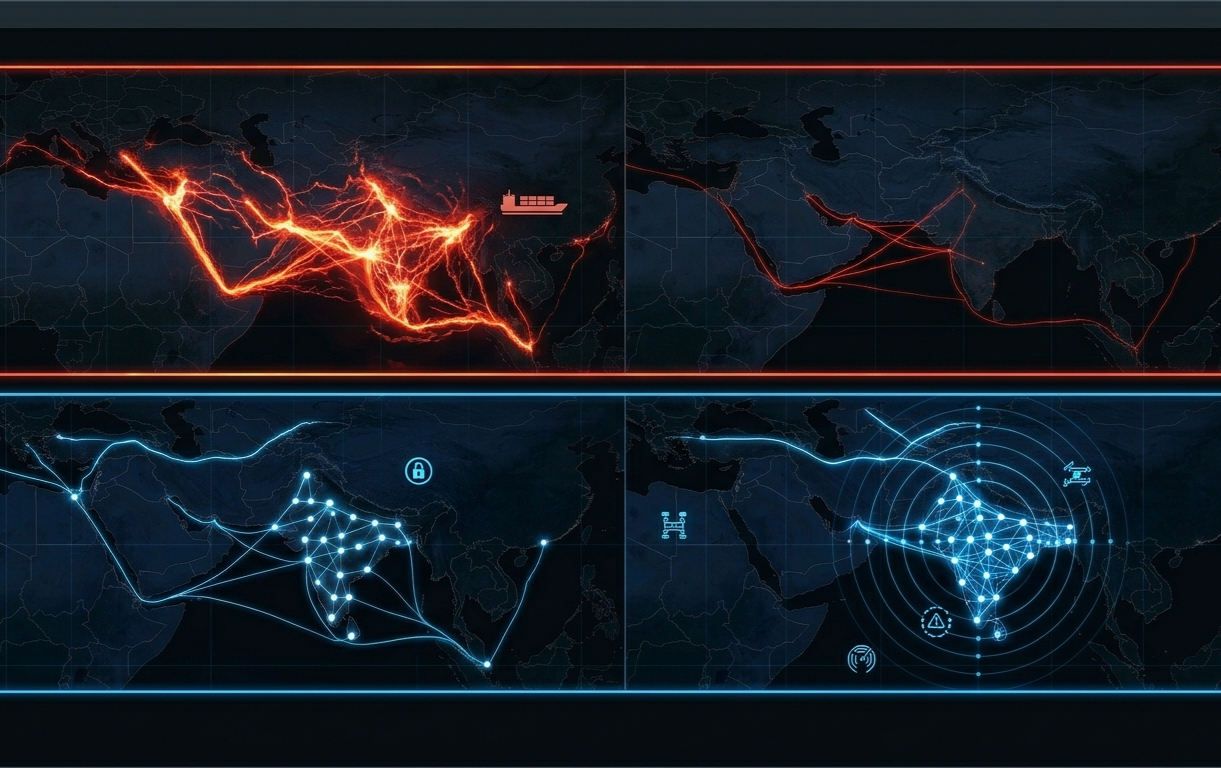
This repeats. Over the past five years, the primary shipping route linking India to Europe has been disrupted multiple times. The triggers changed. The outcome didn’t. What used to be a stable corridor turned into a variable one. Manufacturing does not run on variance.
When the primary route becomes unstable, the question changes. It’s no longer about the best corridor. It’s about the one that still works.
The International North-South Transport Corridor (INSTC) is not elegant, but it functions. Transit times stay within a range. Variance is contained. For manufacturing, that distinction matters more than anything else. INSTC works under stress. That is its only advantage, and right now, it’s enough to matter. Gwadar does not connect into Central Asia by rail. Chabahar does. That is the difference between a port and a supply chain.
The Factory Math
Freight volatility now defines manufacturing margins. For electronics exporters, a 2–3% swing in logistics cost is the entire margin. Working capital gets locked; inventory builds up.
At scale, the system depends on synchronisation. Inputs arrive when expected. Outputs leave on schedule. For firms operating under export-linked incentives, the pressure is tighter. Margins are already calibrated. Any increase in freight cost—or even a delay—eats directly into viability.
A factory can optimise yield, labour, and throughput. It cannot stabilise an unreliable corridor—no matter how efficient it is.
The Files
Policy cannot compensate for a broken corridor.
Corridor reliability is core infrastructure. It is not an external dependency.
Financing, freight risk-backing, and PLI incentives must be directed toward functioning corridors. These are not policy upgrades. They are baseline requirements.
PLI 2.0 doesn’t fail in a boardroom. It fails in transit.
Solutions Spotlight
Logistics-Linked PLI
Recalibrating PLI metrics to reward not just production volume, but corridor reliability and on-time delivery.
The INSTC Pivot
Directing state backing to INSTC as a viable, variance-controlled hedge against primary maritime corridor shocks.
Freight Risk Backing
Establishing state-backed insurance mechanisms for high-value components moving through volatile corridors.
The Corridor Doctrine
Variance vs. Cost
In export electronics, consistency always beats a low-cost, high-variance supplier. Variance is a structural cost.
Delivery as Contracts
Missing a window is a contractual collapse, not a delay. Orders get routed elsewhere, and capability compounds elsewhere.
Logistics Synchronization
The margin in export manufacturing is locked between inputs arriving on time and outputs leaving on schedule. Any break in that rhythm breaks the math.
India will not lose manufacturing on labour. It will lose it on logistics—unless corridor reliability is solved first.