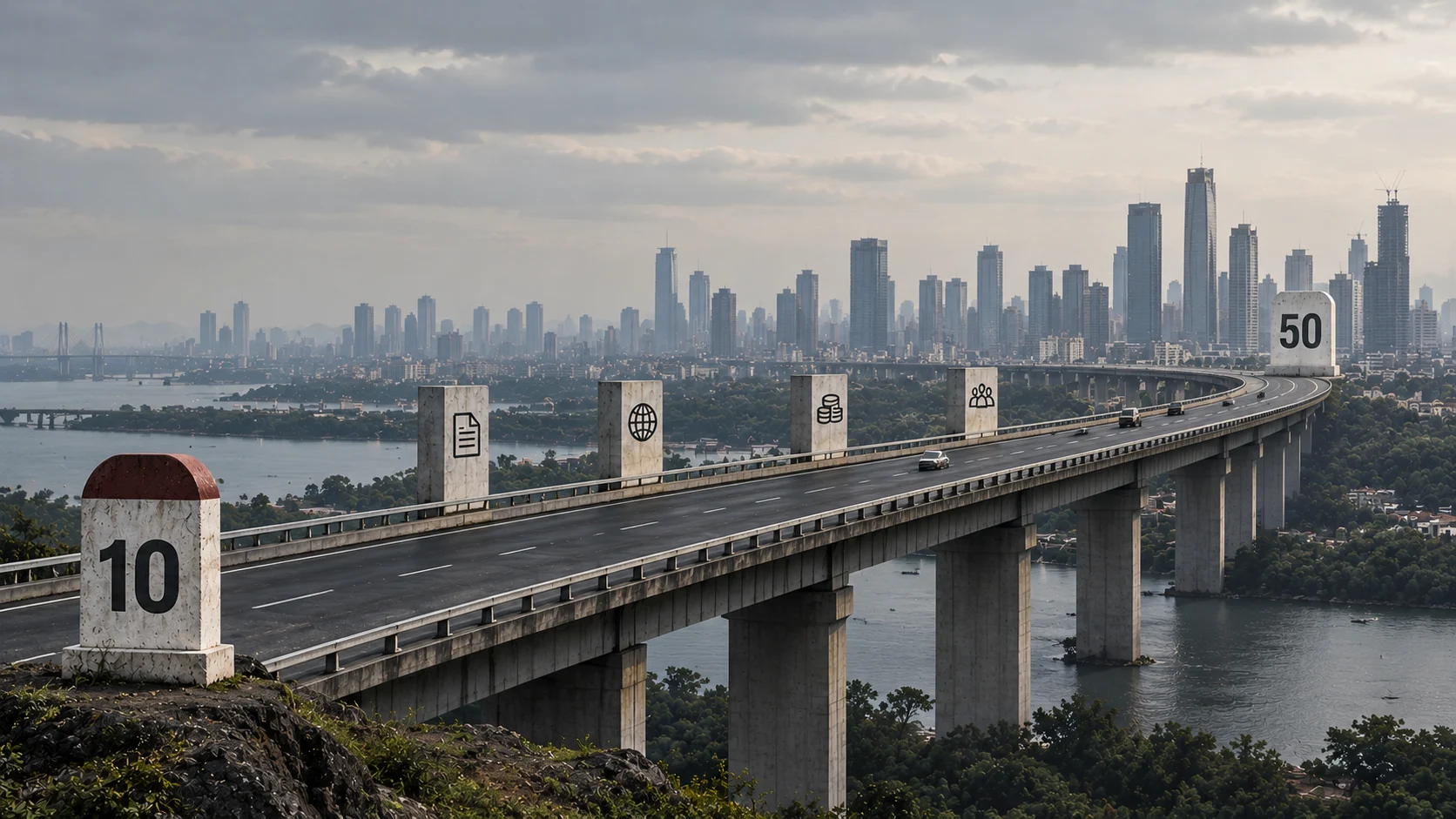
298/543
Lok Sabha votes in favour · 17 April 2026
"This was not an ideological rejection; it was a consequence of a statutory flaw."
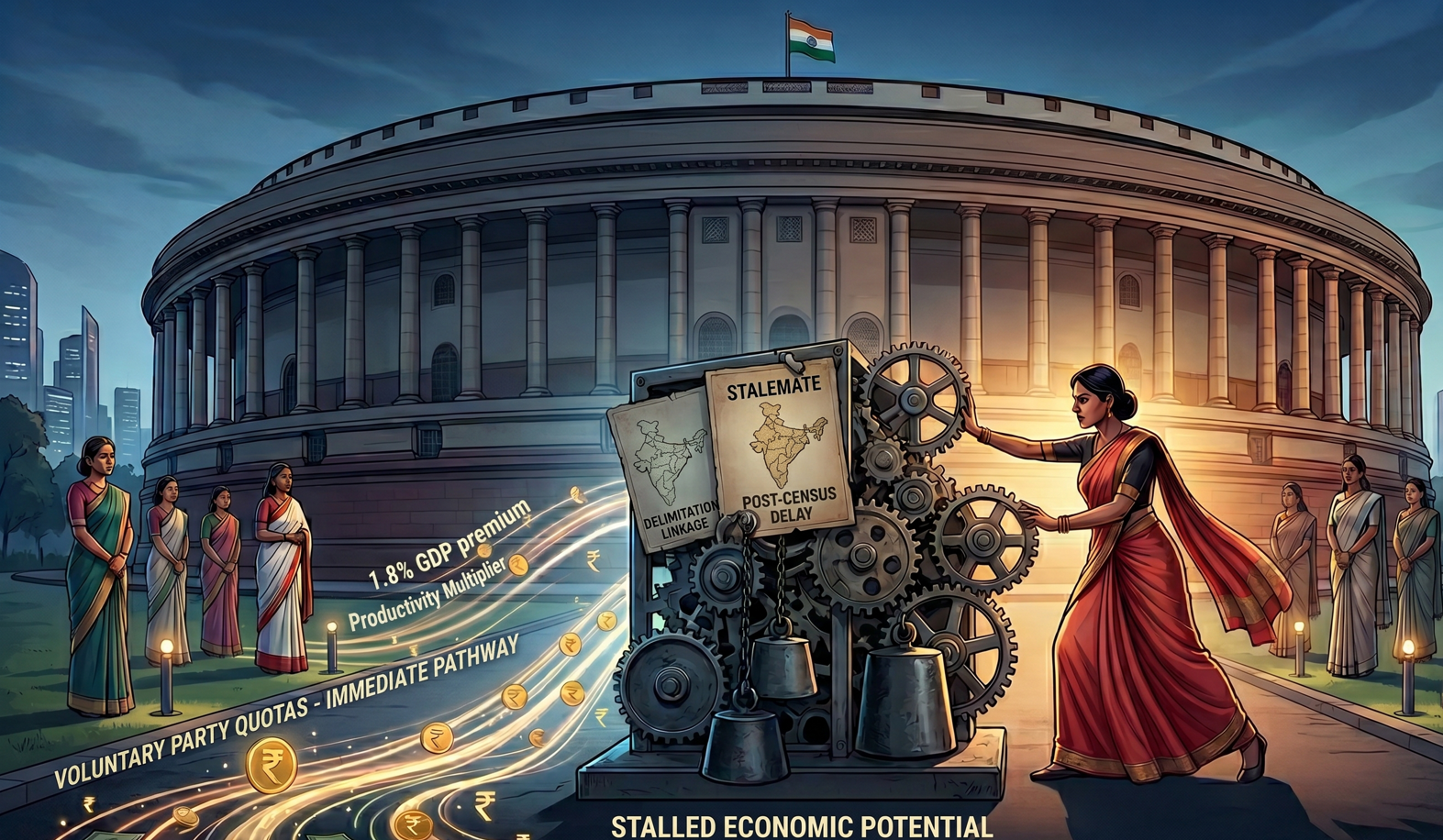
The collapse of the Constitution (131st Amendment) Bill in the Lok Sabha on April 17, 2026, marks a definitive friction point in the expansion of India’s legislative capacity.
While the floor recorded 298 votes in favor, the failure to secure the mandatory two-thirds threshold reveals a structural glitch in the nation’s growth roadmap. This was not an ideological rejection; it was a consequence of a statutory flaw. By anchoring the reservation mandate to the volatile timeline of census-linked delimitation, the Bill was transformed into a regional zero-sum game. Southern states, wary of seeing their parliamentary weight diluted by demographic shifts, viewed the proposal as a tactical threat rather than a social necessity. Stasis is the result. Long-term productivity gains are currently being traded for short-term federal equilibrium.
The cost of this gridlock is quantifiable. Three decades of data from the Panchayati Raj institutions suggest that when women occupy the decision-making layer of local governance, the quality of public expenditure shifts. Evidence points to superior investments in health, water, and primary education—the core engines of a $10 trillion economy.
Empirical studies from Indian state assemblies further indicate that constituencies represented by women often see measurable improvements in local economic activity, driven by tighter oversight and more targeted welfare delivery.
Gender parity at the ballot box translates to fiscal discipline on the ground; this is not a matter of social equity, but the reclamation of structural economic waste. For a nation targeting a consistent 8% growth trajectory, stalling the integration of these leaders into the state machinery is a strategic error. It keeps an evident leadership premium on the sidelines.
The path forward begins with a strategic decoupling of representation from seat expansion. Political parties do not need a constitutional mandate to optimize their candidate lists. The upcoming state elections offer a window for a transition through the voluntary adoption of internal quotas. Parties that treat candidate selection as a talent procurement exercise—rather than a legacy of patronage—are likely to strengthen their grip on an increasingly gender-conscious electorate. This momentum should be formalized through a standalone legislative track that targets the existing 543-seat grid. Such a move bypasses the regional anxieties that derailed the 131st Amendment and allows the state to test the effectiveness of the mandate in real-time.
Ultimately, the stalemate is a calculation of survival, forcing demographic weight to compete with gender parity in an outdated electoral ledger. A $10 trillion future demands a cleaner separation: technical delimitation must be isolated from social imperatives. Success relies on viewing representation as a productivity multiplier, not a demographic bargaining chip. India’s real constraint is not a lack of consensus, but a system unable to modernize until it redesigns the very incentives that govern its own survival.
Key Takeaway
A $10 trillion future demands a cleaner separation: technical delimitation must be isolated from social imperatives. Representation is not a demographic bargaining chip — it is a productivity multiplier. India’s real constraint is not a lack of consensus, but a system unable to modernize until it redesigns the very incentives that govern its own survival.
Rishi Vora
Editor & Publisher, India Front
Rishi Vora is the Editor and Publisher of India Front, India's premier thought-leadership magazine. He writes on governance, economic policy, and India's strategic position in the global order.