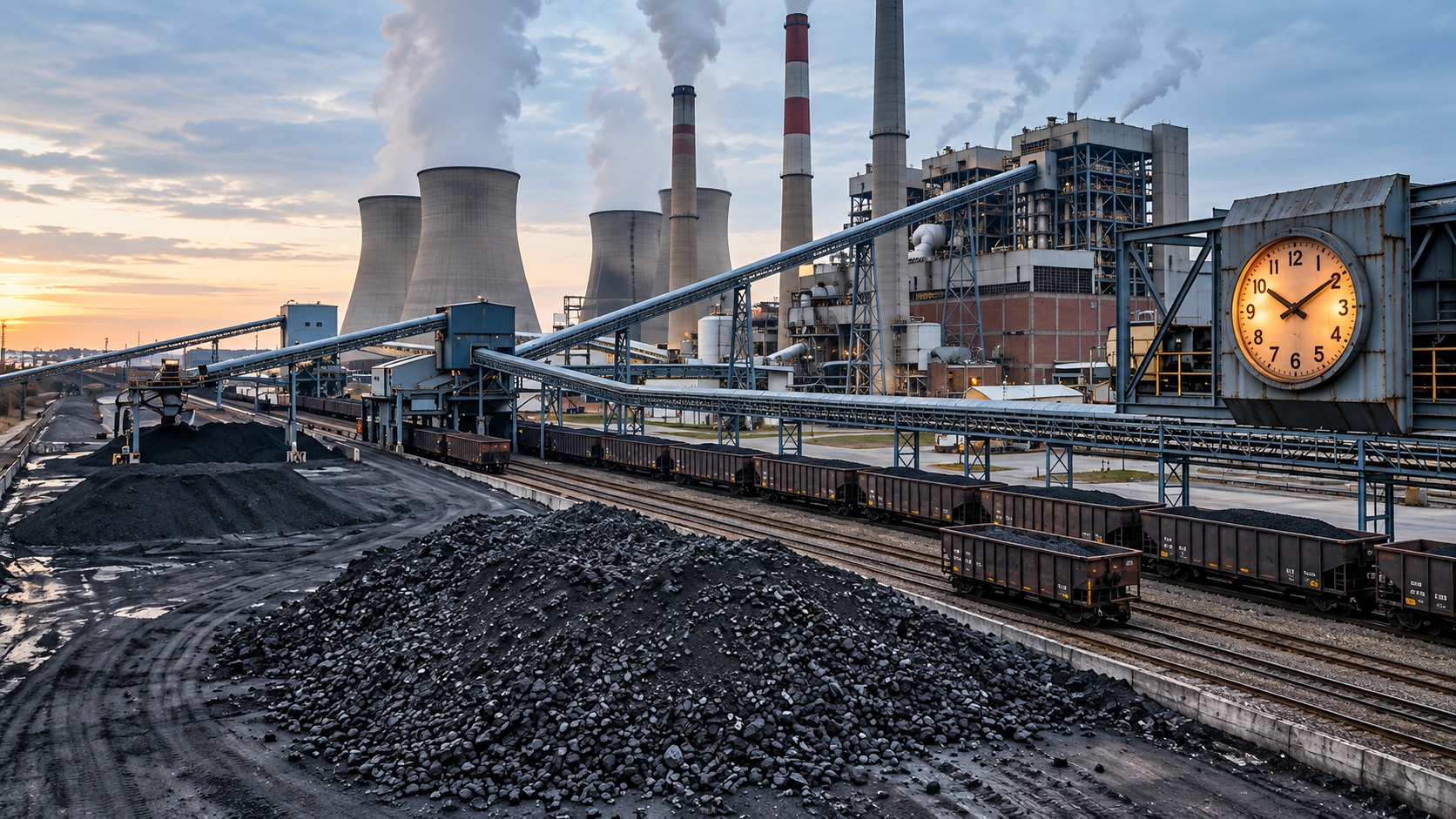
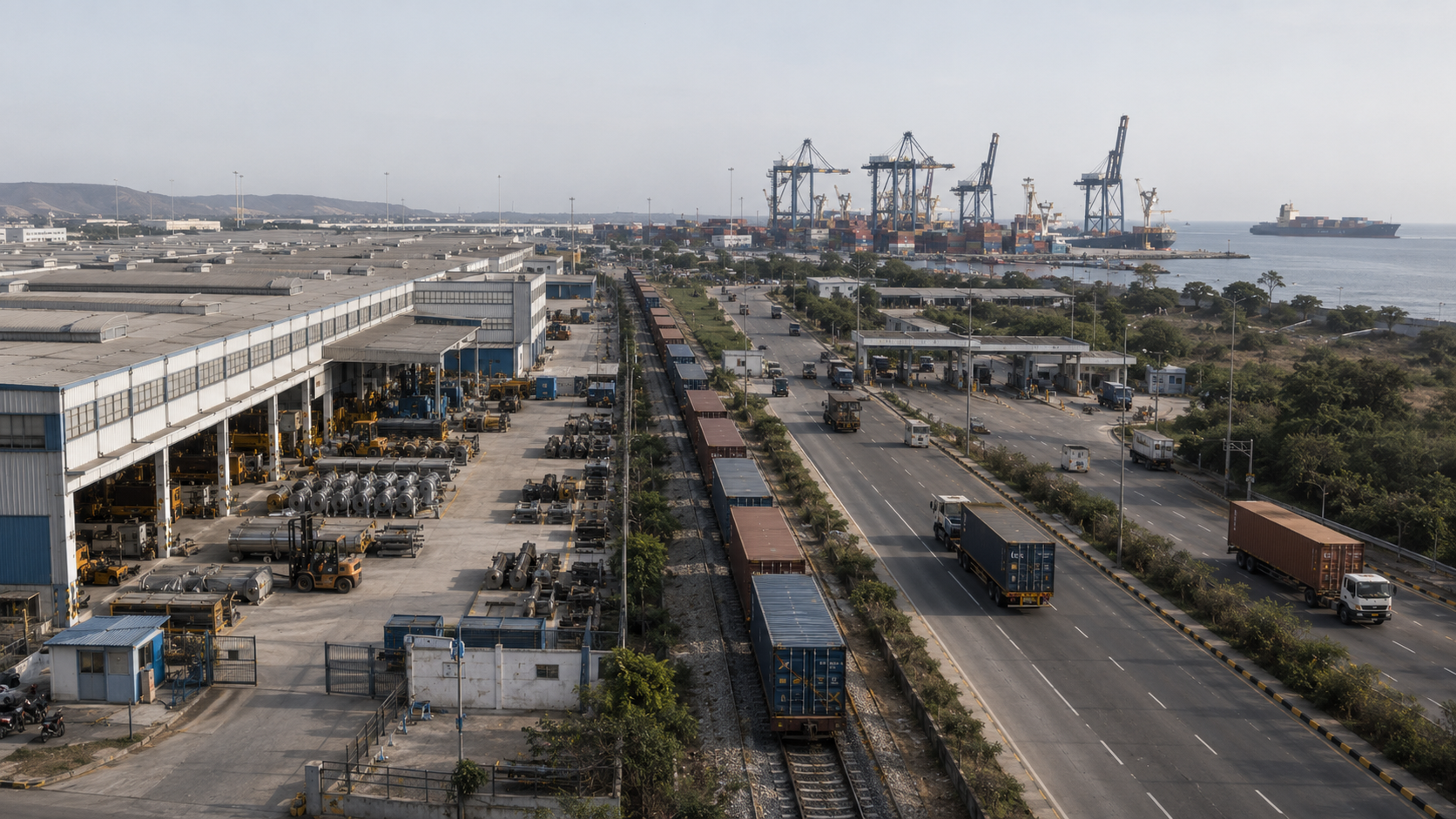
When the global economy convulses, transmission is mechanical. Oil moves first. Freight follows. Capital reacts. Currency absorbs. Inflation waits for the opening.
None of this requires a domestic failure. That is the new condition.
India is not in crisis; India is under transmission. The pressure begins outside, but its path is direct:
- It enters through imports.
- It travels through fuel.
- It appears in prices.
- It reaches the household.
- It tests the state.
This is the shockwave economy.
The old growth question was speed. How fast can GDP rise? How much can India build? How much value can it export?
Those questions remain. They are no longer enough.
A fast economy can still be exposed. Size can still carry weakness. Growth can still import instability.
Expansion was the historical task. Absorption is the next.
Solutions Spotlight
The Architecture of Absorption
Growth needs protection where the pressure enters. Four shields matter most.
1. Energy
Every imported barrel carries price risk. Every price spike travels through the economy: fuel becomes freight, freight becomes inflation, and inflation becomes policy constraint.
Energy security is not a sector issue. It is macroeconomic defence. Renewables, storage, grid flexibility, electric mobility, biofuels and strategic reserves are not a climate checklist. They are pressure-reduction tools. The less crude India imports, the less the world can set the terms.
2. Trade
India cannot only buy from the world. India must earn from the world. More exports are good. Deeper value retention is decisive.
Assembly can raise output without deepening power. Value capture does that. Imported inputs keep the exposure alive. Domestic capability reduces it. The export question is not volume alone. It is control.
3. Supply Chains
A factory is not a base if its parts, machines and materials are imported. Assembly shows presence. Sourcing proves depth.
4. Fiscal Space
A state with fiscal room can respond without breaking direction. Buffers are not caution. They are strength stored in advance.
Frameworks
The Transmission Chain
Shockwaves do not enter randomly. External pressure does not arrive as a single, isolated event; it travels through a mechanical chain.
Often, it begins with energy. For an economy that imports over 80% of its crude oil, volatility does not ask permission. A conflict lifts crude. The import bill widens. The trade deficit feels it. The currency begins to carry the signal.
Then, capital reacts. Capital is fast; factories are slow. That is the imbalance exposure exploits. A rate move in another country hits markets here. A stronger dollar pressures the rupee. A risk-off cycle can move money out before a domestic plant is even built. External capital should accelerate India. It must never steer India.
As the currency absorbs the impact, the pressure passes forward. Inflation is where the world finally reaches the kitchen. A shipping shock becomes a freight bill. A freight bill becomes a food price. A food price becomes a household cut. A household cut becomes demand pressure.
Rates can cool inflation.
They cannot manufacture onions.
They cannot refine crude.
They cannot unload ports faster.
Resilience is built before the chain reacts.
Doctrine
Growth Must Become Difficult to Disturb
This is the economic doctrine. India must stop judging policy only by the activity it creates; it must be measured by what it protects.
A factory that leaves the critical core outside India is not enough. An energy transition that does not reduce import exposure is not enough. Export growth without value capture is not enough. Fiscal spending without response capacity is not enough.
The test is protection. The test is absorption. The test is whether growth holds when the world shakes.
That is resilience. Not posture. Capacity.
India has momentum, but momentum is not armour. The world will keep transmitting pressure. Oil will move. Freight will shift. Capital will turn. Currencies will swing. Inflation will return when channels open.
A serious economy does not wait for calm. It builds for pressure.
The India Front View
India is navigating economic shockwaves. This is not alarm. It is diagnosis.
Growth remains India's strength. Exposure remains India's test.
India must keep building. But the next economy will not be judged only by what it builds in calm weather. It will be judged by what remains standing when the shockwave passes.
Go Deeper
Energy
India's Last Oil Crisis
Rishi Vora on the pivot from petro-dependence to the Sovereign Electron
ReadIssue 3 · Green Wave
India's Global Green Wave
The full edition on India's renewable and energy sovereignty push
ReadIssue 1 · Export Surge
India's Export Surge
10 leaders on how India is reshaping its role in global supply chains
ReadIssue 4 · Upfront
No Corridor, No Components
Factory scale is determined by corridor reliability — not capex, not labour, not policy
Read